Fed Governor Goolsbee Expresses Caution Over Tariffs' Impact on Inflation
In a recent address before the customary pre-FOMC meeting quiet period, Chicago Federal Reserve President Austin Goolsbee shared his perspectives on the current economic landscape. His remarks highlighted a degree of apprehension regarding the latest inflation figures, specifically pointing to the role of trade tariffs in escalating the cost of goods. Furthermore, Goolsbee touched upon the sensitive subject of central bank autonomy, expressing his unease with ongoing dialogues that question its independence. While acknowledging the current inflationary environment, his commentary also suggested a potential for significant interest rate adjustments downward over the next twelve months, signaling a cautiously optimistic outlook for future monetary policy.
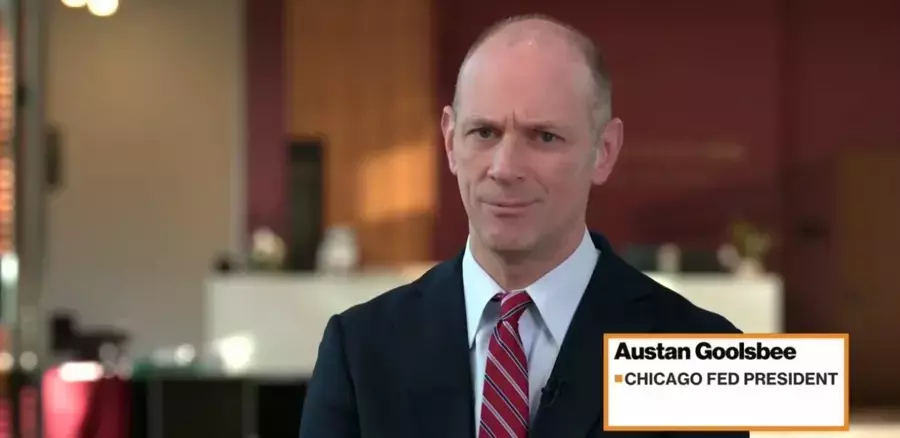
Federal Reserve Official Raises Red Flags on Tariff-Driven Inflation Ahead of Policy Meeting
On the vibrant afternoon of July 18, 2025, precisely at 15:11 GMT, Federal Reserve President Austin Goolsbee of Chicago delivered his final public statements before the onset of the Federal Open Market Committee's (FOMC) mandatory quiet period. This crucial period of silence for central bank officials will extend until the conclusion of the FOMC's rate decision meeting, scheduled for July 30.
During his remarks, Goolsbee articulated a growing sense of apprehension, stemming from the recent Consumer Price Index (CPI) report. He specifically identified that the imposition of tariffs appears to be a significant factor in driving up goods inflation, a trend he views with considerable concern. Beyond the immediate economic data, Goolsbee also conveyed a profound discomfort with the ongoing public discourse questioning the independence of the central bank, underscoring the importance of its autonomy in maintaining economic stability.
Intriguingly, Goolsbee's comments also offered a glimpse into the potential trajectory of monetary policy. He suggested that interest rates could see a noticeable reduction over the course of the next year. This forward-looking statement, while not a definitive commitment, leans towards a more accommodative monetary policy stance, even as he cautiously navigates the immediate challenges of rising goods prices. His nuanced position signals a delicate balance between addressing current inflationary pressures and anticipating future economic conditions that might necessitate lower borrowing costs.
From a journalist's vantage point, Goolsbee's pre-quiet period comments offer invaluable insight into the Federal Reserve's current internal debates and future considerations. His direct acknowledgment of tariffs as an inflation driver is particularly noteworthy, given the broader geopolitical context of trade policy. It highlights how external factors, beyond traditional demand-pull or cost-push elements, are now significantly influencing monetary policy decisions. Moreover, his subtle yet distinct lean towards a future rate reduction, even while expressing wariness about current inflation, suggests a nuanced and perhaps divided sentiment within the Fed regarding the path forward. This intricate balance act, striving to tame inflation without stifling economic growth, underscores the complex challenges policymakers face in navigating an increasingly interconnected global economy. The emphasis on central bank independence also serves as a potent reminder of the foundational principles that underpin the institution's credibility and effectiveness, especially in times of economic uncertainty and public scrutiny. It beckons us to consider the enduring importance of insulating economic policy from short-term political pressures, ensuring stability and long-term prosperity.