Federal Reserve's Hammack Discusses Robust Economy Amidst Inflationary Concerns
In a recent public address, Federal Reserve official Beth Hammack provided a nuanced perspective on the nation's economic health, emphasizing its current strength while acknowledging persistent challenges posed by inflation. Her remarks underscored the central bank's ongoing commitment to a stringent monetary policy designed to steer inflation back to its desired levels. The broader discourse within the Fed, as highlighted by Hammack, revolves around the future trajectory of the economy, particularly in light of current uncertainties that have tempered business investment. Despite market anticipations of potential rate cuts, Hammack conveyed a cautious stance, indicating that such measures are not immediately warranted unless a clear downturn in economic activity emerges. This paints a picture of a central bank navigating a complex economic environment, balancing growth with price stability.
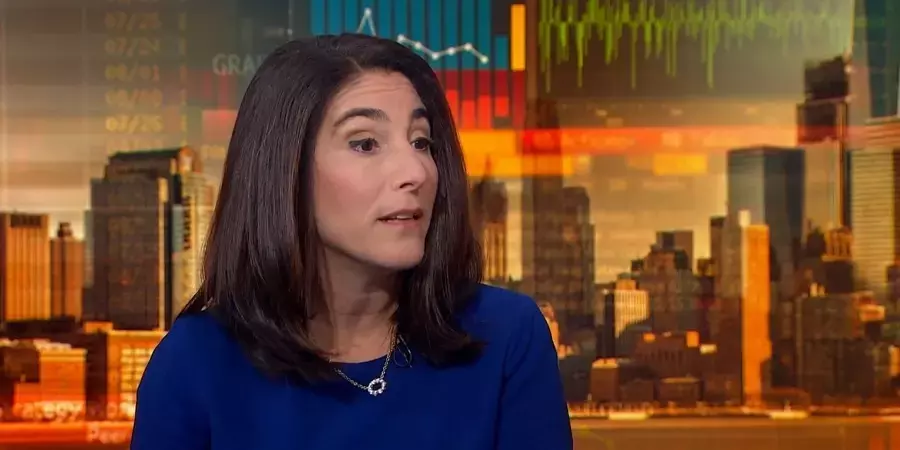
Federal Reserve Official Beth Hammack's Economic Outlook and Policy Stance on FOXBusiness
On a Monday, July 14, 2025, appearance on FOXBusiness, Beth Hammack, an influential figure slated to be a voting member of the Federal Reserve's rate-setting committee in 2026, delivered a comprehensive assessment of the economic climate. Hammack's insights, which emerged during a period of market volatility, provided critical context for investors and policymakers alike. Her address came as the financial markets, particularly the US stock indices, showed modest declines in premarket trading, with the Dow Industrial Average, S&P Index, and tech-heavy NASDAQ all registering losses.
Hammack began by articulating a positive view of the underlying economic fundamentals, stating, “I see an economy that's really healthy.” This optimistic assessment, however, was immediately tempered by her concerns regarding inflation. She noted that while inflation has made observable progress towards the Federal Reserve's long-term target, it remains "still too high." This dual perspective—acknowledging economic vitality alongside inflationary pressures—forms the cornerstone of the Fed's current policy approach.
A key takeaway from Hammack's commentary was the Federal Reserve's unwavering dedication to its inflation mandate. She explicitly stated, “we are not there yet on inflation, important to stay restrictive on monetary policy.” This declaration signals the Fed's intention to maintain a firm grip on monetary conditions, resisting calls for premature easing despite the robust economic picture she painted. The discussion also shed light on internal deliberations within the central bank, with Hammack observing that Fed officials are engaged in “a great debate over the economy.” This suggests a healthy internal dialogue about the path forward, reflecting diverse viewpoints on the appropriate policy response.
Furthermore, Hammack highlighted the chilling effect of economic uncertainty on investment, noting that “many business plans on pause amid uncertainty” and that this uncertainty “has been weighing on investment.” This candid admission underscores a significant challenge for future growth, as businesses hesitate to commit capital in an unpredictable environment. Despite this, she expressed reservations about forecasting an immediate economic boom, remarking, “we don't know if economy will boom later this year.”
Regarding interest rates, Hammack offered a cautious outlook, indicating that the current policy stance is “pretty close to where the neutral rate is.” Crucially, she articulated, “Doesn't see imminent need to cut rates,” pushing back against market expectations, which, as she noted, are "discounting a rate cut in the October meeting and another one before the end of the year." However, she also provided a reassuring caveat for the markets: “If Fed sees economy weakening of course Fed will respond.” This statement provides a degree of flexibility, assuring that the Fed is prepared to pivot if economic conditions deteriorate significantly.
From a journalist's vantage point, Hammack's remarks paint a vivid picture of the intricate balancing act the Federal Reserve is currently performing. On one hand, there's the undeniable strength of the economy, suggesting resilience and underlying health. On the other, the persistent challenge of inflation demands vigilance and a continued commitment to restrictive policies. The revelation of "great debate" among Fed officials is particularly insightful; it reminds us that economic policymaking is not a monolithic endeavor but a dynamic process shaped by diverse perspectives and rigorous analysis. The hesitancy in business investment due to uncertainty serves as a stark reminder that monetary policy, while powerful, does not operate in a vacuum. It interacts with real-world business sentiment and broader geopolitical factors. As observers, we are left with the impression that while the Fed is confident in the economy's current health, it remains acutely aware of the delicate path ahead, ready to adapt its strategy as new economic signals emerge. The future of interest rates, therefore, remains contingent on the evolving dance between inflation, economic growth, and the confidence of the business sector.