Global Financial Outlook: The Dollar's Decline and Market Implications
Financial experts predict a continued decline in the US dollar, driven by decreasing interest rates, sluggish economic growth, and President Trump's trade and tax strategies. Prominent banks like Morgan Stanley, JPMorgan Chase & Co., and Goldman Sachs Group Inc. have reinforced their bearish stance on the greenback, forecasting significant shifts in currency values over the coming months. These forecasts are accompanied by expectations of increased strength in other currencies such as the yen, euro, and Australian dollar, alongside adjustments in Treasury yields.
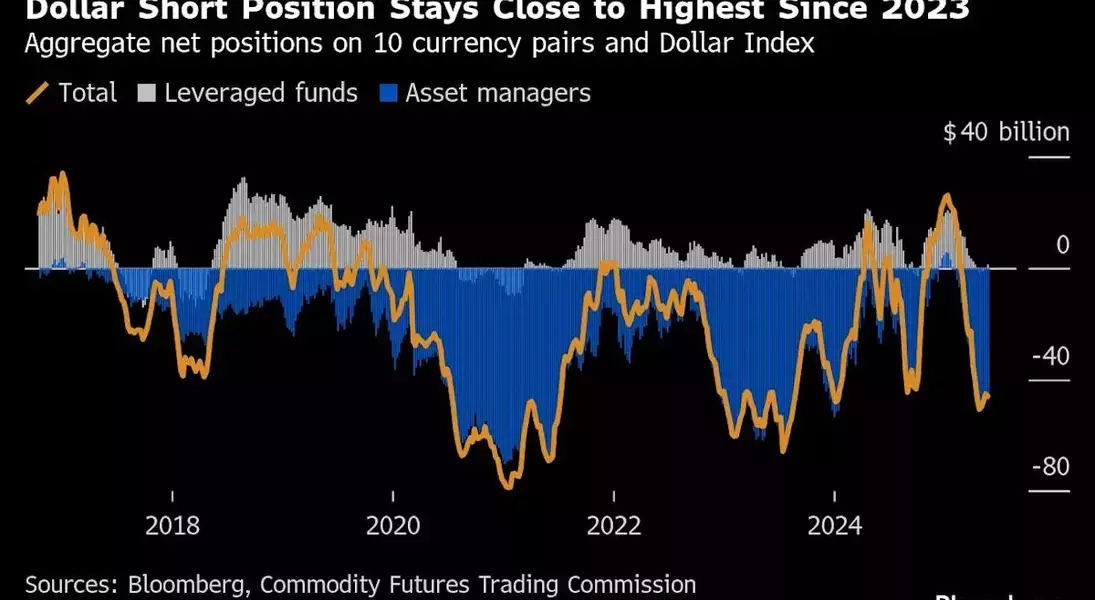
Trade tensions and potential changes in US tax policies add further complexity to the dollar's trajectory. Investors are closely monitoring developments in labor-market indicators and trade negotiations between China and the US, which could influence Federal Reserve policy decisions and subsequently impact the dollar's performance globally.
Predicted Currency Movements and Economic Factors
Major financial institutions foresee substantial changes in the value of the US dollar due to various economic and political factors. Morgan Stanley anticipates a drop to levels last witnessed during the pandemic by mid-next year, while JPMorgan maintains its pessimistic outlook on the US currency. Additionally, Goldman Sachs highlights possible negative repercussions from Washington’s exploration of alternative revenue sources if tariffs face obstacles.
The weakening of the dollar is attributed to several key elements. Interest rate cuts implemented by the Federal Reserve play a crucial role, alongside slower economic expansion influenced by global trade disputes. Furthermore, President Trump's policies concerning trade and taxation contribute significantly to this downward trend. Analysts at Morgan Stanley project a 9% reduction in the US Dollar Index, reaching approximately 91 within the next year. This prediction aligns with broader market trends indicating steeper yield curves and prolonged trading patterns outside recent ranges. The euro, yen, and Swiss franc are identified as potential beneficiaries of the dollar's descent, with specific forecasts suggesting the euro could reach $1.25 and the pound might climb to $1.45. Meanwhile, the yen is expected to strengthen considerably.
Investor Concerns and Market Dynamics
Beyond immediate currency fluctuations, investors express growing concerns regarding potential alterations in US tax regulations affecting foreign entities. These changes could deter international investment in American assets, amplifying existing apprehensions about diversification away from US holdings. Simultaneously, upcoming US labor-market data and trade negotiation updates will heavily influence future monetary policy actions by the Federal Reserve.
Goldman Sachs analysts emphasize that investor focus remains centered on possible modifications to US tax rates impacting foreign individuals and corporations. Buried within legislative proposals currently advancing through Congress, these measures propose elevated taxes on passive income earned by global investors holding substantial American assets. Such initiatives could intensify fears surrounding US investment risks, particularly when combined with shifting asset correlations prompting greater diversification efforts. Moreover, Goldman Sachs' models indicate the dollar is roughly 15% overvalued, suggesting additional depreciation ahead. This anticipated decline stems primarily from repositioning and repricing of worldwide assets, reflecting broader reallocations across global markets. As attention turns towards critical labor-market statistics and evolving trade discussions involving China and the US, these factors collectively shape ongoing assessments of Federal Reserve policies and their implications for the dollar's future direction.