Japanese Political Shift: Implications for Trade Negotiations and Economic Stability
Recent electoral outcomes in Japan have significantly reshaped the nation's political landscape, marking a historic loss of parliamentary majority for the long-standing ruling coalition. This development has cast a shadow over Prime Minister Ishiba's administration, placing it under considerable pressure as crucial trade discussions with the United States loom. The immediate aftermath saw market fluctuations, particularly in the Japanese yen and bond yields, underscoring investor apprehension regarding potential instability. The shift signals a challenging period for the government, particularly concerning its capacity to navigate complex international agreements and maintain domestic economic equilibrium.
The weekend's election results delivered a substantial blow to Prime Minister Ishiba, as his Liberal Democratic Party (LDP) and Komeito coalition failed to secure the necessary 50 seats for an upper house majority, achieving only 47. This outcome represents a landmark event, as it is the first time since 1955 that the ruling coalition has lost its dominance in the upper legislative body. Such a significant shift inevitably triggers heightened scrutiny and intensifies the pressure on Ishiba to retain his leadership.
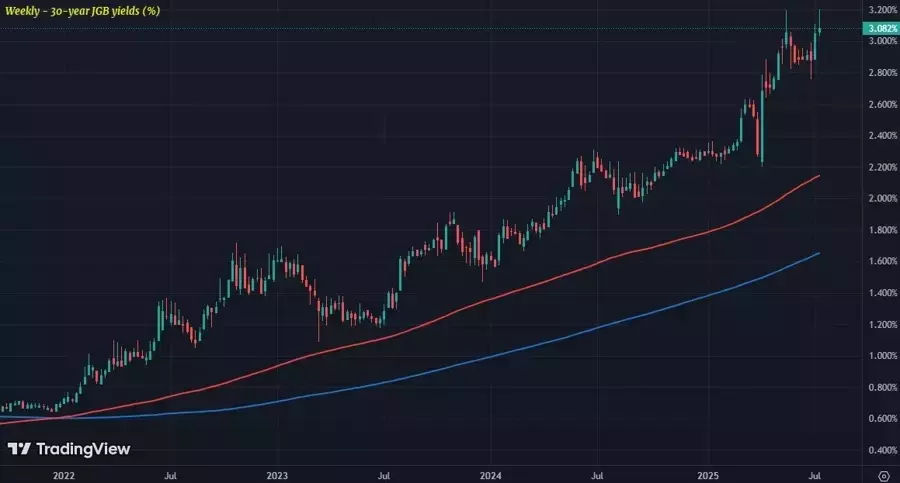
Financial markets reacted with initial volatility, as the Japanese yen experienced an early surge before retracing some of its gains. This mixed market behavior reflects underlying concerns about potential deepening political risks. Moreover, the recent political developments are not conducive to investor sentiment in the bond market. Yields on 30-year Japanese Government Bonds (JGBs) continue to trade above 3%, a trend observed since April, primarily driven by ongoing fiscal anxieties and now exacerbated by the emerging political gridlock.
Having previously ceded control of the lower house in October, the current loss of the upper house majority further diminishes Prime Minister Ishiba's and the ruling administration's grip on policy implementation in Tokyo. While some analysts argue that the market has already factored in much of this political uncertainty, the tangible reality of such a significant power shift remains impactful. Japan has historically been perceived as a bastion of political stability; however, events following the COVID-19 pandemic and the passing of former Prime Minister Abe have ushered in a new era of political dynamism and unpredictability.
The immediate implication of this political upheaval extends directly to the ongoing tariff negotiations between Japan and the United States. With a critical August 1st deadline for trade talks approaching, there is a prevailing sentiment that removing Ishiba from his position before this date would be ill-advised, at least for the moment. This ensures that Ishiba will remain at the forefront of these discussions. However, the newfound weakness of his government could be exploited by domestic lawmakers, potentially hindering his ability to secure support for any concessions made during negotiations with Washington. This vulnerability makes it increasingly probable that Japan might face the imposition of 25% tariffs, irrespective of the outcome of the talks, as Ishiba's compromised political standing undermines his negotiating leverage.
This political juncture poses substantial challenges for Japan's future policy direction, particularly regarding international trade and economic stability. The path forward for the Ishiba administration will require adept political maneuvering to regain influence and ensure that Japan's interests are effectively represented on the global stage amidst a backdrop of heightened domestic political fragility.