Kevin Warsh Calls for Major Policy Shift at Federal Reserve, Advocates for Rate Cuts
Former Federal Reserve Governor Kevin Warsh recently outlined his vision for a transformative shift in the central bank's operational philosophy. His statements underscore a fundamental disagreement with current economic paradigms and propose radical changes to address contemporary financial challenges. Warsh's insights, delivered during a prominent media appearance, highlight his belief that prevailing economic theories are outdated and fail to adequately capture the true drivers of inflation and economic stagnation. He passionately advocates for policies that prioritize the stimulation of the 'real economy' over what he perceives as a disproportionate focus on financial markets.
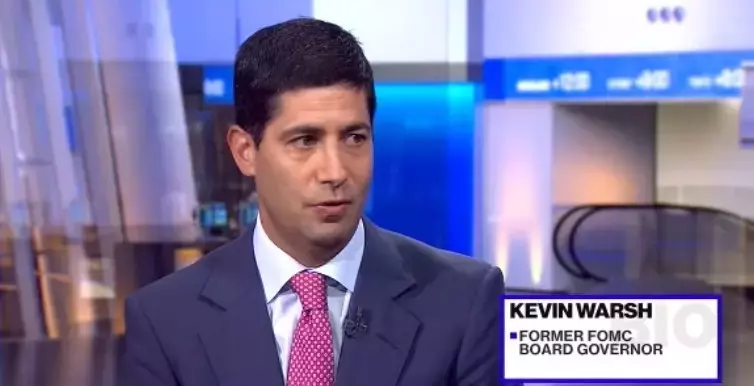
A core tenet of Warsh's argument revolves around the concept of 'regime change' within the Federal Reserve. This goes beyond mere adjustments to interest rates or minor policy tweaks; it signifies a complete re-evaluation of the Fed's role, its understanding of economic forces, and its personnel. He asserts that the current approach, which he likens to economic thinking from the late 1970s, is ill-equipped to handle modern economic complexities. His call for new personnel suggests a desire for fresh perspectives and a departure from entrenched orthodoxies, aiming to inject dynamism and innovation into the central bank's strategic decision-making process.
A Paradigm Shift in Monetary Policy
Kevin Warsh, a former Federal Reserve Governor, has called for a radical shift in the Fed's approach to monetary policy, advocating for lower interest rates and a re-evaluation of economic principles. Speaking on Fox, Warsh articulated his belief that the central bank needs a 'regime change,' encompassing new policies, a fresh perspective on economic growth, and a deeper understanding of inflation's true origins. He specifically challenged the notion that inflation is primarily wage-driven, asserting instead that it is a consequence of excessive money supply growth. Warsh's controversial suggestion is that reducing the Fed's balance sheet, a process known as quantitative tightening, could effectively function as a substantial interest rate cut, thereby invigorating the broader economy rather than solely benefiting financial markets.
Warsh's critique extends to the impact of current monetary conditions on different sectors of the economy. He observes that while financial markets are experiencing a boom with thriving IPOs and abundant liquidity, the 'real economy' — encompassing everyday businesses and consumers — is struggling. This disparity, he argues, necessitates a fundamental change in strategy. His proposal to unwind the Fed's balance sheet by trillions of dollars, in collaboration with the Treasury Secretary, is presented as a potent tool to achieve a de facto rate reduction. This move, he contends, would 'turbocharge' the real economy, leading to more widespread prosperity. However, the exact mechanism by which both quantitative easing and quantitative tightening could be considered 'rate cuts' remains a point of contention and calls for further clarification.
Rethinking Quantitative Easing and Tightening
Warsh's remarks also delve into the nuanced and seemingly contradictory effects of quantitative easing (QE) and quantitative tightening (QT). He recalls the 2008 financial crisis, during which interest rates were slashed to zero, and the Fed introduced QE, estimating that every trillion-dollar expansion of the balance sheet was equivalent to a 50-basis-point rate cut. Curiously, Warsh now posits that a reduction in the Fed's balance sheet, or quantitative tightening, could also be considered a form of rate cut. This raises a significant question regarding his economic model: how can both an expansion and a contraction of the balance sheet lead to the same outcome of lower rates, and what are the implications for market interpretation?
The apparent paradox in Warsh's argument—that both the expansion and contraction of the Fed's balance sheet can be seen as rate cuts—warrants careful consideration. During periods of quantitative easing, the injection of liquidity into the financial system is generally understood to lower long-term interest rates, making borrowing cheaper and stimulating economic activity. Conversely, quantitative tightening involves removing liquidity, which typically puts upward pressure on interest rates. Warsh's assertion suggests a more complex, perhaps counterintuitive, relationship between the Fed's balance sheet operations and effective interest rates, implying that the ultimate impact on the 'real economy' is what defines a 'rate cut' in his view, regardless of the direction of balance sheet adjustments. This perspective challenges conventional economic wisdom and invites further debate among policymakers and economists.