United States Imposes 50% Tariff on Copper Imports, Triggering Market Surge
Navigating the Copper Conundrum: Tariffs, Prices, and Strategic Implications
US Initiates Substantial Tariff on Copper Imports, Market Reacts Sharply
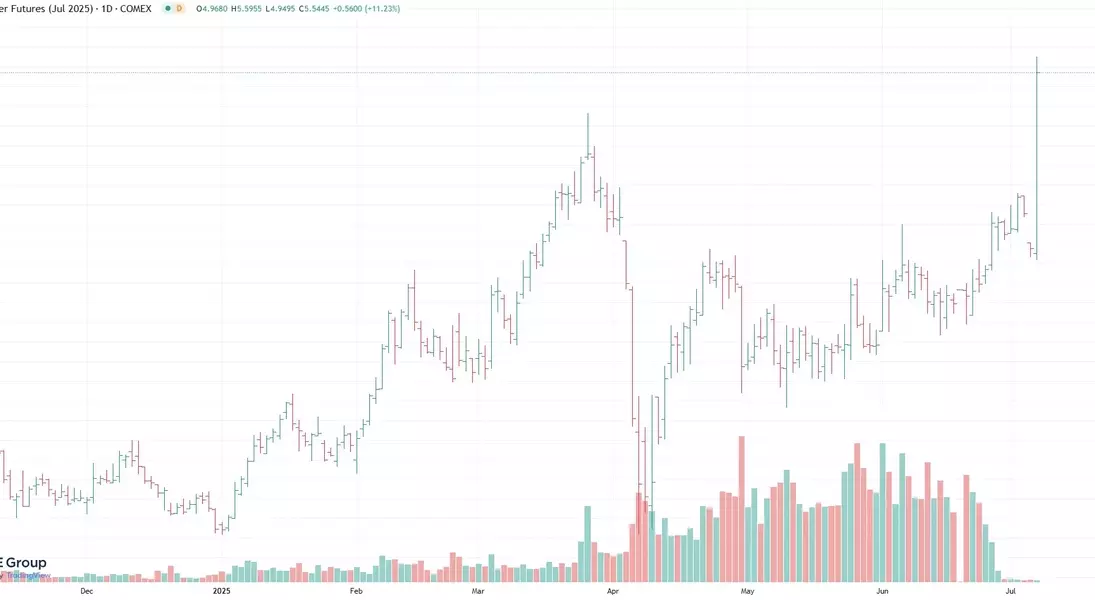
The United States government has announced a hefty 50% tariff on all copper imports, a decision that instantly sent shockwaves through the global commodities market. Following the announcement, domestic copper prices witnessed an extraordinary surge, climbing by 11%. The CME copper contract, a key benchmark, immediately reflected this change, with its last traded price jumping to $5.59 as market participants reacted to the sudden policy shift.

The Policy's Genesis: A Long-Anticipated Move with Immediate Consequences
The imposition of a substantial tariff on copper imports was not entirely unforeseen, as the concept had been discussed in political circles for some time. Despite previous hints, the official declaration of a 50% tariff has ignited a robust market response. The immediate outcome is a sharp increase in the cost of copper, raising concerns about its implications for various industries dependent on this essential metal.
Unraveling the Economic Impact: Challenges for US Manufacturing and Infrastructure
The economic rationale behind such a steep tariff remains a subject of intense discussion among experts. Critics argue that making imported copper more expensive could hinder the growth of US industries that rely heavily on the material. Furthermore, the nation's ambitious plans for modernizing its electrical grid, developing extensive infrastructure, and promoting electrification all require vast quantities of copper. An increased cost for this fundamental raw material could potentially undermine these strategic objectives, making domestic manufacturing less competitive globally.
Stimulating Domestic Production: A Complex Road Ahead for Copper Supply
While the tariff is seemingly designed to stimulate domestic copper mining and processing, achieving this goal is fraught with challenges. The development of new copper mines is a prolonged endeavor, often spanning many years, if not decades. Consequently, the tariff's immediate effect will likely be a significant increase in costs for the foreseeable future, without a corresponding rapid expansion in domestic supply. Such policy volatility also creates an uncertain investment climate, potentially deterring the very long-term commitments required for mining projects.
Focus on Smelting Capacity: A Strategic Imperative Beyond Tariffs
US officials have also emphasized the need to bolster domestic smelting capacity, as much of the world's copper processing is currently concentrated in China. While tariffs on raw copper imports may seem like a direct way to address this, it is not clear how they directly encourage the construction of new smelting facilities within the United States. A more nuanced approach, perhaps involving targeted incentives or investments, might be necessary to re-establish a robust domestic smelting industry.
Market Dynamics and Future Outlook: A New Era for Copper Trading and Global Supply
The new tariff policy is expected to create a significant premium for copper traded within the United States compared to international markets. This scenario primarily benefits domestic companies with substantial mining operations in the US, such as Freeport-McMoran, which are now positioned to capitalize on the higher domestic prices. Beyond the immediate market effects, this policy could also prompt other nations to implement measures to protect their own copper supplies or build strategic stockpiles, recognizing copper's growing importance and potential scarcity. This move reinforces the long-held bullish outlook for copper, as the metal continues to reach new long-term price highs, underscoring its critical role in the global economy and its evolving geopolitical significance.
Long-Term Market Implications: Futures React to Persistent Upward Pressure
The impact of the tariff is not confined to immediate market reactions; it has also influenced copper futures contracts extending into May 2026, which have seen price increases exceeding 10%. This indicates a market expectation of sustained higher prices, signaling a fundamental shift in the long-term outlook for copper. The broad-based increase across future contracts suggests that market participants anticipate these tariffs to have a lasting effect on supply-demand dynamics and overall price levels, reinforcing the notion of copper as an increasingly valuable commodity in the coming years.