Navigating Inflation: The Crucial Role of the US CPI Report and Tariff Impacts
The eagerly anticipated release of the US Consumer Price Index (CPI) report for June is poised to offer crucial insights into the nation's economic landscape, especially regarding inflationary trends. Experts are closely examining whether the recent implementation of tariffs has begun to exert noticeable upward pressure on consumer prices. While initial estimates project modest increases in both headline and core inflation metrics, there's a prevailing sentiment that the full ramifications of trade policies might not yet be fully reflected in the immediate data. This report carries significant implications for financial markets, shaping expectations around the Federal Reserve's monetary policy trajectory, particularly the timing and likelihood of potential interest rate adjustments amid ongoing economic uncertainties and political discourse.
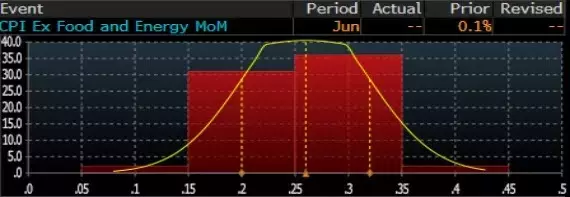
Scheduled for release, the June CPI figures are drawing considerable attention from economists and market analysts. The consensus forecasts suggest that monthly headline inflation could rise to +0.3% from the previous +0.1%, with the annual rate potentially climbing to +2.7% from +2.4%. Similarly, core monthly inflation is estimated to reach +0.3% (from +0.1%), and core annual inflation is projected to hit +3.0% (from +2.8%). These numbers, if realized, would indicate a noticeable acceleration in price increases across the economy.
However, a critical element of uncertainty revolves around the influence of tariffs imposed since April. Many analysts, including those from Goldman Sachs, contend that the effects of these trade measures on official consumer prices may not yet be fully apparent. This delay is attributed to factors such as importers utilizing payment deferral systems, meaning the complete impact of tariffs might only become evident in the July CPI report. This potential lag introduces a layer of complexity, as a lower-than-expected inflation reading in June could inadvertently foster a false sense of security regarding price stability, even as protectionist trade policies continue to evolve.
The immediate market reaction to the CPI data will largely hinge on how it influences the perceived probability of a Federal Reserve rate cut. Currently, traders are assigning a significant likelihood (around 62%) to a September rate reduction, with expectations of approximately 47 basis points of cuts by year-end. A downside surprise in the inflation figures could further solidify these expectations, despite the Federal Reserve's apparent need for more definitive clarity on inflation's trajectory. The shifting deadlines for tariffs, now extended to August 1st, further complicate the central bank's task of accurately assessing medium-term inflationary pressures. Consequently, a July rate move appears increasingly improbable, even with persistent public pressure from political figures on the Fed's stance.
Ultimately, the forthcoming June CPI report will serve as a pivotal indicator for market participants, offering a snapshot of current inflationary trends. Yet, given the delayed impact of tariffs and the broader economic landscape, the data's true significance might not be fully understood until subsequent reports. The interplay between inflation data, trade policy, and central bank decisions will continue to be a dominant theme in financial markets, demanding careful observation and strategic adaptation from investors and policymakers alike.