Navigating the Tech Sector's Volatility: A Tale of Contrasts in Today's Market
The stock market recently presented a complex picture, marked by considerable variations across key sectors. The tech and consumer discretionary segments, along with the financial industry, garnered particular investor attention. An in-depth examination of these movements reveals the underlying forces shaping the current market dynamics.
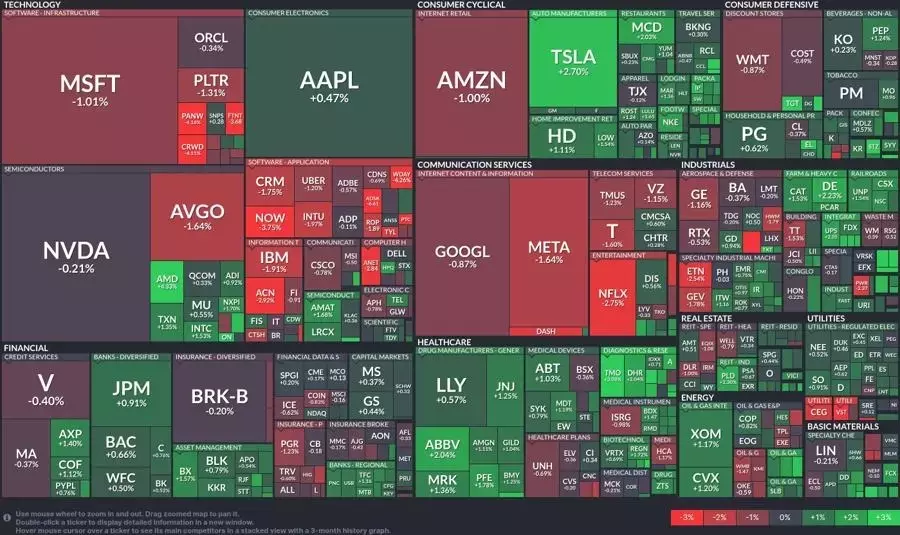
A notable surge in the consumer discretionary sector was led by Tesla, which experienced an impressive rise, reflecting robust investor confidence in the automotive innovator's future prospects. This positive movement within consumer discretionary stocks suggests an optimistic outlook regarding future consumer spending. Concurrently, Home Depot also registered a solid increase, reinforcing the sector's upbeat mood.
In stark contrast to Tesla's ascent, the broader technology sector exhibited considerable instability. Major players like Microsoft and Oracle saw their shares decline, indicating a degree of investor caution amid ongoing economic uncertainties. Furthermore, Meta Platforms and Alphabet's Google both recorded losses, which may be attributed to concerns over advertising income and increased regulatory scrutiny within the digital space.
The semiconductor industry also faced headwinds, with slight dips for Nvidia and a more pronounced drop for Broadcom. These setbacks are likely linked to persisting worries about global supply chain disruptions and geopolitical tensions impacting the production and distribution of vital components.
Conversely, the financial sector displayed notable robustness. Institutions such as JPMorgan Chase and Goldman Sachs reported gains, buoyed by favorable economic indicators and promising projections for corporate earnings. This resilience suggests that the financial segment is weathering current market fluctuations more effectively than certain parts of the technology sector.
The prevailing market environment is characterized by divergent trends and sector-specific shifts. While some consumer-focused tech companies like Tesla are thriving, significant declines are observed among other major technology and semiconductor enterprises. This disparity underscores the importance of a nuanced approach to market analysis.
Given the current market volatility, especially within the technology and semiconductor industries, investors should exercise prudence. Adjustments to investment strategies may be warranted, emphasizing the importance of diversifying portfolios across various sectors to mitigate risks associated with sudden market shifts. Keeping abreast of detailed analyses and ongoing market updates is crucial for informed decision-making in these uncertain times.