New Zealand Services Sector Remains in Contraction, Economic Recovery Delayed
New Zealand's vital services sector finds itself mired in a persistent downturn, having contracted for the fifth consecutive month. This prolonged period of decline highlights significant challenges for the nation's economic outlook, as key indicators signal a worsening situation rather than a much-anticipated recovery. Despite a marginal uptick in the Performance of Services Index, the sustained contraction underscores underlying vulnerabilities and prompts experts to revise their timelines for a robust economic rebound.
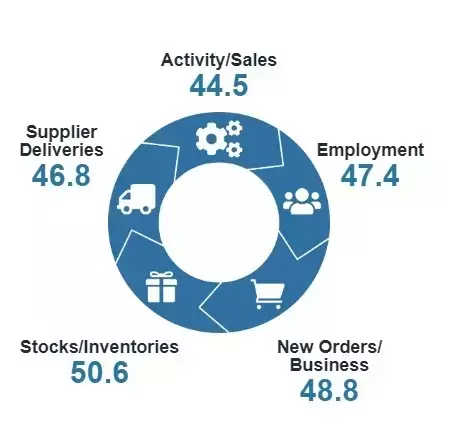
The current state of New Zealand's services industry is a cause for concern, with the sector struggling to regain momentum. This continued contraction not only reflects immediate operational difficulties for businesses but also casts a shadow over broader economic projections. Policymakers and economists are closely monitoring these trends, seeking strategies to invigorate growth and mitigate the impact of this extended period of subdued activity on the overall prosperity of the country.
Services Sector's Continued Decline
New Zealand's services sector recorded its fifth consecutive month of contraction in June, with the Performance of Services Index (PSI) registering at 47.3. While this represents a modest increase of 3.2 points from May's 44.1, the figure remains below the crucial 50-point threshold, which differentiates expansion from contraction. Historically, the average PSI has been 52.9, underscoring the severity of the current downturn. BusinessNZ's CEO, Katherine Rich, noted that while most sub-indices showed improvement compared to the previous month, the sector has experienced only minimal expansion in just one of the past sixteen months. This indicates a deeply entrenched period of decline, far removed from typical growth patterns.
The persistent contraction in New Zealand's services sector, as evidenced by the June PSI of 47.3, signifies a challenging economic environment. This marks the fifth consecutive month that the sector has remained below the 50-point expansion threshold, despite a slight improvement from the previous month's 44.1. The historical average PSI of 52.9 highlights the current weakness, demonstrating a significant deviation from long-term trends. BusinessNZ's CEO, Katherine Rich, observed that despite some sub-indices showing marginal gains, the overall picture reveals a sector that has barely expanded in over a year. This prolonged slump suggests systemic issues and a difficult path ahead for a sector that is a major contributor to the New Zealand economy. The ongoing contraction points to a significant weakening of demand and operational challenges for service-oriented businesses.
Economic Recovery Remains Elusive
BNZ's Senior Economist, Doug Steel, emphasized that the continued readings below 50 in the PSI indicate a worsening of service sector conditions, rather than an improvement. He highlighted that even with the slight increase in the headline PSI measure, the fact that it remains in contraction suggests that New Zealand's long-anticipated economic recovery is being continually pushed further out. This sentiment reflects growing apprehension among economists regarding the pace and timing of a rebound, as the persistent weakness in services translates into broader economic stagnation. The sector's struggles pose a significant barrier to achieving robust economic health.
The outlook for New Zealand's economic recovery appears increasingly distant, largely due to the sustained contraction in the services sector. BNZ's Senior Economist, Doug Steel, articulated that any PSI reading below 50, regardless of incremental improvements, signals a deterioration in conditions. This ongoing trend suggests that the envisioned economic rebound for New Zealand is facing continuous delays. The challenges within the services industry, a cornerstone of the economy, are proving more stubborn than anticipated. The inability of this sector to achieve consistent growth is directly impeding the nation's overall economic revitalization, leaving experts concerned about when a true recovery might finally materialize and how extensive it will be.