Palantir's Soaring Stock: Is a Bubble Brewing?
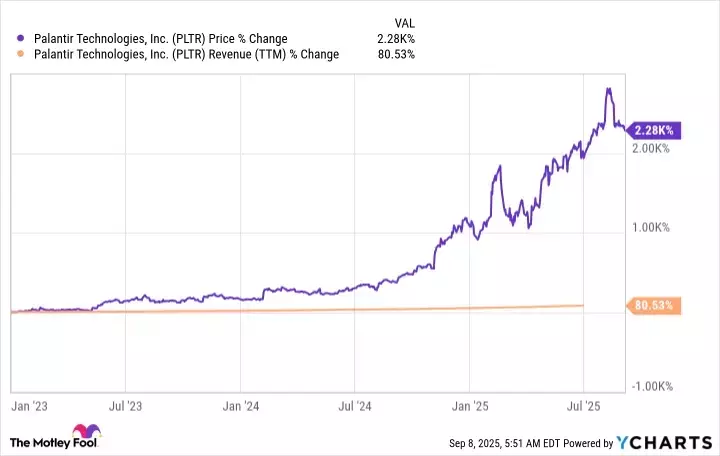
Palantir Technologies has seen an extraordinary surge in its stock value recently, with its shares climbing by thousands of percentage points over the past few years. This remarkable market performance, however, overshadows a less dramatic, albeit still substantial, growth in the company's underlying business. The discrepancy between the stock's astronomical returns and the actual revenue growth prompts a critical examination of whether Palantir's current valuation is sustainable or if it represents a market bubble in the making. Understanding this dynamic is crucial for investors, as historical patterns suggest that such rapid valuation expansions without commensurate business growth often lead to significant corrections.

Palantir, a leader in AI-powered data processing software, effectively transforms raw data into actionable insights. The company's innovative AI models set it apart in the industry. Initially serving government sectors, Palantir has successfully expanded its reach into commercial markets, establishing a strong dual client base. This strategic diversification has been pivotal to its growth.
The ongoing AI revolution has fueled demand for Palantir's software across both its government and commercial divisions. In the second quarter alone, commercial revenue jumped by 47% to $451 million, while government revenue saw a 49% increase, reaching $553 million. These figures demonstrate robust performance and explain much of the investor enthusiasm surrounding the company. However, the extraordinary gains in stock price far exceed these impressive, yet more grounded, business growth rates.
The dramatic increase in Palantir's stock price, by over 2,280% since early 2023, points to what market analysts refer to as 'multiple expansion.' This occurs when the market becomes willing to assign a much higher valuation to a company's sales or earnings than it previously did. While this can sometimes be justified by a company's improved market position or enhanced profitability, in other instances, it signals an overvaluation that could lead to a bubble.
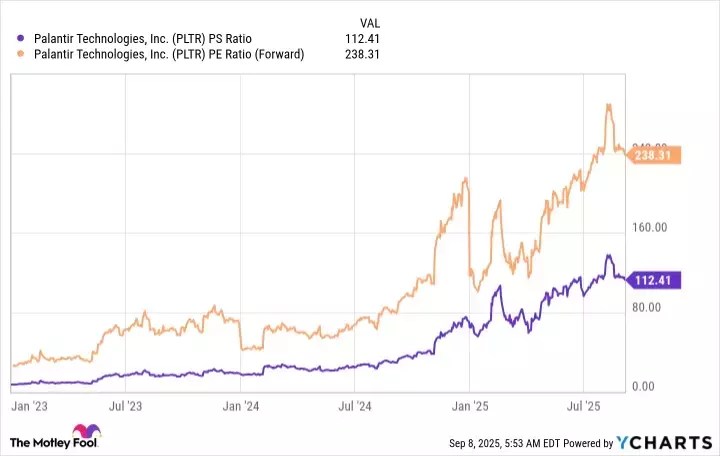
Palantir's current valuation metrics are exceptionally high, with the stock trading at more than 110 times its sales and nearly 240 times its forward earnings. Such elevated multiples are seldom sustained, even by companies experiencing rapid growth. For example, Nvidia, despite recording multiple quarters of revenue tripling, never reached sales or earnings multiples beyond 50. Similarly, SoundHound AI, with a 217% revenue growth, maintains a price-to-sales ratio of 42, significantly lower than Palantir's. These comparisons highlight Palantir's unique and potentially precarious market position.
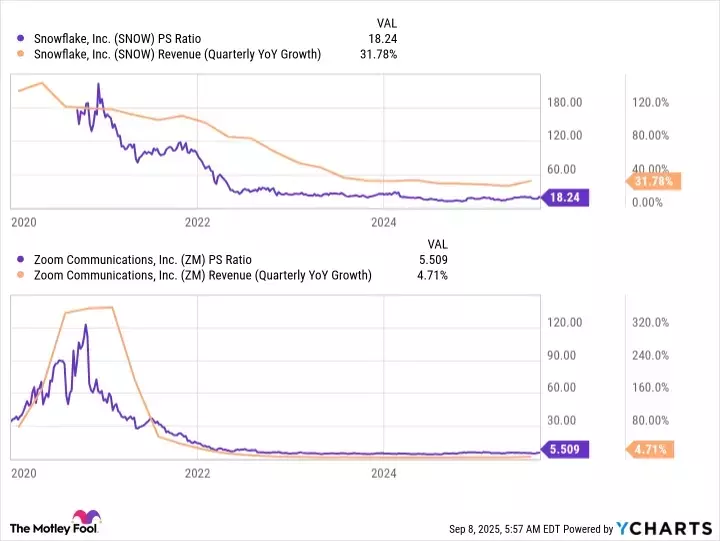
Historical precedents offer cautionary tales. Companies like Zoom Communications and Snowflake, which also experienced rapid growth and traded at over 100 times sales, eventually saw significant declines from their peaks. Snowflake is still down over 40% from its all-time high, and Zoom has plummeted by 85%. While Palantir's current bubble might take time to deflate, history indicates that companies with such extreme valuations rarely provide favorable long-term returns for investors. The stock's price already incorporates an immense amount of future growth, leaving little room for upside and making it particularly vulnerable during market downturns. Consequently, investors may find it prudent to explore other AI-focused companies that offer promising prospects without the burden of such aggressive valuations.