Currencies>
Revolutionizing Money: The Rise of Centralized Digital Currencies
06/02 2025

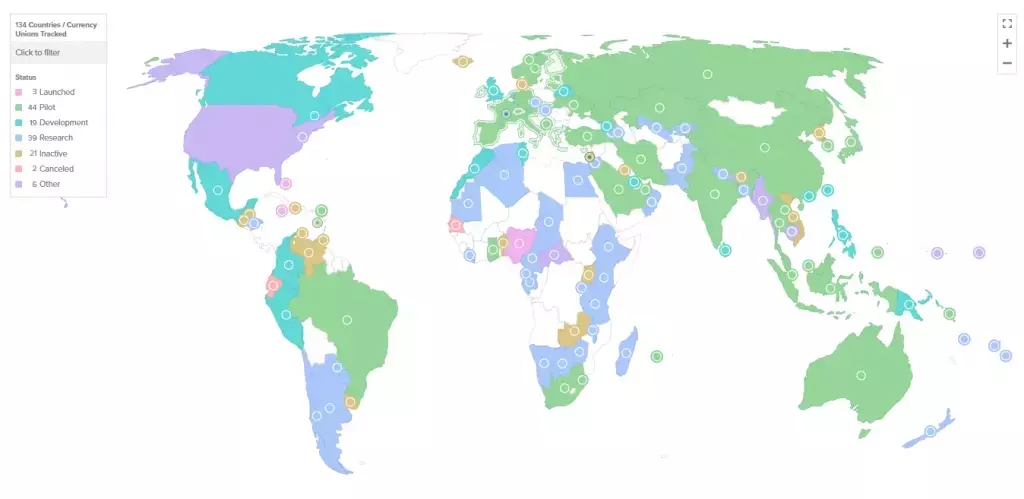







The world is witnessing a monumental shift as nine leading economies embark on the journey to transform their monetary systems through centralized digital currencies. These initiatives, designed to replace traditional cash, promise to redefine financial control and potentially challenge the global dominance of the U.S. dollar. Governments are harnessing advanced technologies to create a new era of digital currency that integrates seamlessly with existing frameworks while maintaining strict oversight.
Unveiling the Future: Why Digital Currency Adoption Matters
The adoption of centralized digital currencies marks a pivotal moment in global finance, offering unprecedented levels of transparency and control. As nations across the globe accelerate their efforts, the implications for economic stability and privacy are profound.India's Leap into the Digital Age
India stands at the forefront of this revolution with its ambitious digital rupee initiative. Already, over 140 million wallets have been activated in 15 cities, signaling a massive shift towards a cashless society. By 2026, projections indicate that 80% of retail transactions will occur digitally. A standout feature of this system is its ability to facilitate offline transactions, ensuring users retain control even without internet connectivity. Behind the scenes, the Reserve Bank of India has quietly integrated tools that enable comprehensive monitoring of all financial activities, setting the stage for an era where every transaction can be tracked and analyzed.This transformation not only enhances convenience but also strengthens regulatory oversight. For instance, the integration of real-time data analytics allows authorities to detect anomalies instantly, thereby curbing illicit activities. Furthermore, the scalability of the digital rupee infrastructure ensures it can accommodate future growth, positioning India as a leader in this technological advancement.China's Strategic Surveillance Framework
In China, the rollout of the e-Yuan extends beyond mere digitization; it represents a strategic move to consolidate state control over financial interactions. Currently operational in 25 provinces, the e-Yuan boasts an impressive user base of 260 million individuals. What sets this initiative apart is its direct connection to state surveillance networks, enabling seamless integration of transaction data into broader security protocols. Beijing's ambition extends globally, aiming to establish the e-Yuan as a dominant force in international trade by 2025.The implications of such extensive surveillance cannot be understated. By linking every transaction to personal identities, the Chinese government gains unparalleled insight into consumer behavior and spending patterns. This level of granularity empowers policymakers to make informed decisions, fostering economic resilience and stability. Moreover, the export of this model to other countries could redefine global financial dynamics, challenging established norms and structures.Nigeria's Compulsory Transition to Digital Payments
Nigeria presents a unique case study in the implementation of centralized digital currencies. Approximately 20% of the population has been transitioned to the eNaira through incentivized measures, including restrictions on cash withdrawals. This approach aims to encourage widespread adoption, although resistance from those preferring traditional methods has led to account freezes. Such stringent policies underscore the government's commitment to transitioning fully to digital payments.Despite these challenges, the benefits of the eNaira are significant. Enhanced traceability reduces instances of fraud and corruption, promoting a more transparent financial ecosystem. Additionally, the integration of mobile technology makes banking services accessible to previously underserved populations, bridging the gap between urban and rural areas. As Nigeria progresses, it serves as a blueprint for other developing nations seeking similar transformations.Russia's Digital Ruble: A System of Control
Russia's approach to centralized digital currencies exemplifies a focus on control and accountability. With participation from 11 major financial institutions, the digital ruble enables real-time transaction monitoring. Each activity is meticulously recorded, complete with user identification, granting the government the authority to freeze accounts without prior notice. This level of oversight eliminates traditional banking privacy, aligning with the nation's broader security objectives.The implications of such a system extend beyond financial regulation. By integrating tax systems directly, the digital ruble facilitates automatic compliance, reducing instances of evasion. This synergy between technology and governance ensures a robust framework capable of addressing emerging challenges. As Russia continues refining its digital currency, it sets a precedent for others exploring similar avenues.Brazil's Drex: Integrating Taxation and Surveillance
Brazil's CBDC initiative, known as Drex, showcases an innovative fusion of financial oversight and taxation. Scheduled for launch by 2025, Drex incorporates instant transaction freezing capabilities, reinforcing government authority over monetary activities. Its seamless integration with tax systems ensures total surveillance, providing authorities with comprehensive insights into financial behaviors.This system offers numerous advantages, including enhanced revenue collection and reduced administrative burdens. Automated processes streamline operations, allowing for more efficient resource allocation. Moreover, the use of distributed ledger technology enhances security, safeguarding sensitive information from unauthorized access. As Brazil navigates this transformative phase, it demonstrates the potential of centralized digital currencies to revolutionize fiscal management.Global Perspectives: Expanding the Digital Horizon
Beyond individual nations, the global landscape of centralized digital currencies is rapidly evolving. Saudi Arabia's digital riyal employs national ID cards to track user identities, ensuring accountability at every step. Similarly, Singapore's Project Orchid focuses on constructing robust CBDC frameworks to analyze spending habits, fostering smarter financial decisions. South Africa's Project Khokha leverages blockchain technology to enhance traceability in retail payments, promoting transparency and efficiency.In Europe, substantial investments totaling €1.5 billion underscore the commitment to launching a digital euro by 2026. These endeavors collectively emphasize the prioritization of governmental control over user privacy, reshaping how finances are managed worldwide. The convergence of these initiatives signals a new paradigm in global finance, one characterized by enhanced oversight and diminished autonomy.Most Popular
Hot Stories Today