Trade Optimism Insufficient to Sway BOJ amid Yen's Political Vulnerability
Recent positive developments in trade are boosting Japan's economic outlook, yet analysts from SMBC caution that these favorable indicators are unlikely to trigger a shift in the Bank of Japan's current monetary strategy. The prevailing sentiment is that broader political instability remains a more significant determinant for the yen's performance, outweighing the impact of isolated economic upticks. Consequently, market participants are expected to continue prioritizing these geopolitical factors, leading to sustained depreciation pressure on the Japanese currency. This highlights a complex interplay where robust economic fundamentals struggle to overcome the shadow cast by political uncertainties, ultimately limiting the yen's upward potential and keeping the central bank's policy stance unchanged.

Hirofumi Suzuki, the lead currency strategist at SMBC in Tokyo, has articulated this view, stressing that while the improving trade picture is certainly beneficial for the nation's economy, it falls short of being a compelling reason for the Bank of Japan to consider an interest rate hike. His assessment underscores a critical distinction between economic encouragement and the stringent conditions required for a pivotal monetary policy adjustment.
Suzuki further elaborated on the persistent influence of political dynamics. He noted that the financial markets are more attuned to the inherent risks stemming from political uncertainty than to any potential tightening of monetary policy. This heightened focus on risk aversion means that even with positive trade flows, the yen is prone to continued downward pressure as investors seek safer havens or other, less volatile assets. The interplay between trade improvements and political instability creates a delicate balance for the Japanese currency.
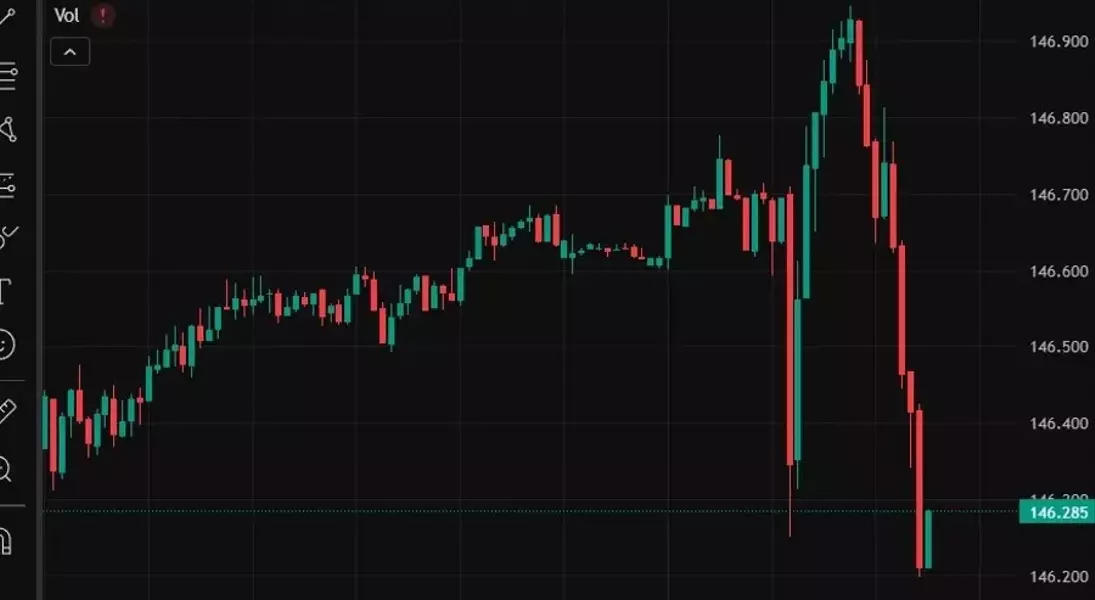
In the immediate aftermath of these observations, the USD/JPY currency pair has shown a tendency to hover slightly below its earlier sharp decline, while Japanese government bond yields have experienced an uptick. This market reaction aligns with the strategist's perspective, illustrating the prevailing sensitivity to broader risk factors rather than solely to economic fundamentals. It suggests that despite encouraging economic signals, the overall environment continues to be shaped by a cautious outlook, with political considerations heavily influencing investor behavior and currency valuations.
In sum, the current economic landscape for Japan presents a paradox: promising trade data offering some relief, yet this is largely insufficient to instigate a change in the Bank of Japan's cautious approach to interest rates. The market's primary concern remains rooted in the enduring political uncertainties, which consistently overshadow positive economic news and continue to exert downward pressure on the yen. This dynamic implies that the currency's near-term path will likely be dictated more by the ebb and flow of political developments than by the immediate gains from international commerce.