UK Inflation's Evolving Challenges for the Bank of England
The Bank of England faces a complex and evolving inflationary landscape, with recent data highlighting a shift in the primary drivers of price increases. While the central bank has grappled with persistent services inflation, a new and pressing concern has emerged: the accelerating rise in food prices. This development presents a significant challenge to monetary policymakers, complicating their efforts to navigate stagflation risks and chart a clear path for future interest rate decisions.
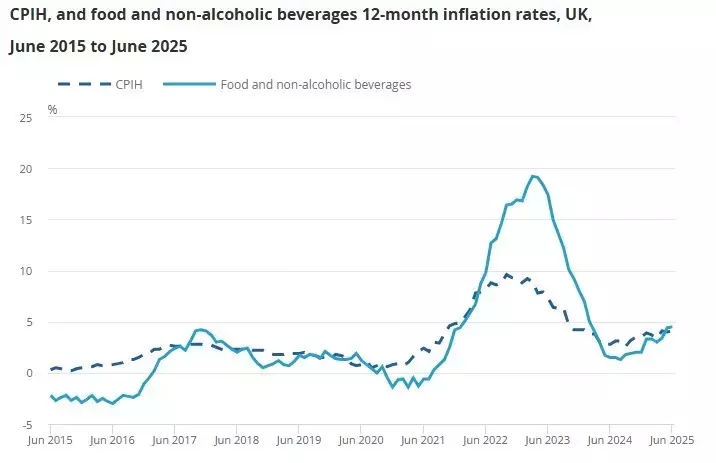
The latest inflation figures for June have sent a clear signal to the Bank of England: the battle against rising prices is far from over, and new fronts are opening. The unexpected surge in food inflation, now outpacing the broader Consumer Price Index including Housing (CPIH), introduces a critical variable into the economic equation. This renewed pressure on essential goods means the BOE must recalibrate its strategy, balancing the need to tame inflation with the broader economic implications of sustained high prices, particularly for household budgets. As the UK economy continues to grapple with the specter of stagflation, the central bank's agility in addressing these multifaceted inflationary pressures will be paramount.
Emerging Inflationary Pressures
The recent UK inflation report for June indicates an unexpected uptick, particularly driven by a notable increase in food prices. This resurgence in food inflation, marking its third consecutive monthly rise and reaching levels not seen since February of the previous year, presents a significant concern for the Bank of England. While the CPIH registered a 4.1% increase, food price inflation soared to 4.5%, underscoring a disproportionate impact on household staples.
This renewed emphasis on food costs is especially problematic for the BOE, as policymakers recognize the profound impact that daily expenditures like groceries, fuel, and energy bills have on public perception of inflation. The current trajectory of food prices is far from reassuring, not only in the UK but across the broader European region, with the UK's situation appearing particularly pronounced. Consequently, the central bank must now expand its vigilant oversight beyond the traditional focus on services inflation to actively monitor and address the escalating costs of food, which directly affect the everyday financial well-being of consumers. This shift in inflationary drivers demands a revised and comprehensive approach to monetary policy, as the previous strategies may not adequately address the unique challenges posed by widespread increases in essential goods.
Navigating Monetary Policy Amidst Uncertainty
Services inflation, while remaining a persistent issue at 4.7% (contrary to projections of a decline), is viewed by the Bank of England as a more manageable challenge, showing at least a gradual trend toward improvement. However, the unexpected and significant rise in food prices introduces a fresh layer of complexity for the BOE. This dual inflationary pressure means the central bank is caught between addressing one concern and then immediately confronting another, creating a challenging policy environment.
Despite these inflationary headwinds, the overall economic outlook suggests that a softening labor market may provide some room for the BOE to consider further interest rate adjustments. Although an August rate cut appears plausible given current indicators, the broader context of persistent stagflation risks implies that any move towards monetary policy normalization will be a cautious and protracted process, rather than a rapid series of cuts. The central bank must meticulously assess forthcoming economic data, particularly from the labor market, to ensure its policy decisions effectively balance the imperative of price stability with the need to support sustainable economic growth, all while navigating the unpredictable currents of global and domestic inflationary pressures.