Uncertainty in Federal Reserve Leadership Impacts US Dollar Stability
The recent volatility observed in the US dollar can be significantly linked to the unresolved questions surrounding the future leadership of the Federal Reserve. Financial institutions, including Bank of America, have pointed out that this ambiguity prevents the dollar from achieving sustained gains, as market participants begin to factor in the possibility of a more accommodating central bank. This situation is further complicated by political influences, particularly the stance of former President Trump regarding interest rate policies.
Federal Reserve's Leadership Transition and its Impact on Global Markets
In recent times, the global financial landscape has been keenly observing the unfolding situation regarding the leadership of the United States Federal Reserve. A prominent analysis from Bank of America has highlighted that the prevailing uncertainty over who will guide the Fed in the coming period is exerting considerable downward pressure on the U.S. dollar. This apprehension, according to the bank's experts, has impacted the greenback more profoundly than other assets, hindering its capacity to maintain upward momentum.
Speculation is rife within financial circles concerning the potential re-appointment of current Federal Reserve Chair Jerome Powell, especially if there were to be a shift in presidential administration. This ongoing debate leads investors to increasingly consider a future where the central bank might adopt a less stringent approach to monetary policy. Analysts from Bank of America further emphasize that even in the scenario of a conventional change in leadership, the market's collective mindset is already gravitating towards an environment characterized by a less restrictive Federal Reserve.
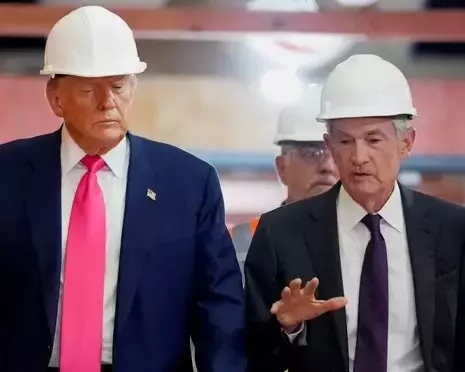
Adding another layer of complexity to this already intricate situation are the public pronouncements from former President Trump. He has openly advocated for interest rate reductions and even conducted a notable visit to the Fed's headquarters, actions that amplify the perceived pressure on the central bank to adjust its economic strategy.
From a journalist's perspective, this confluence of political rhetoric and economic anticipation paints a compelling picture of how influential institutions like the Federal Reserve are not insulated from broader political currents. The market's immediate response, particularly the dollar's subdued performance, serves as a stark reminder of the delicate balance between maintaining central bank independence and navigating external pressures. For readers, this scenario underscores the critical importance of understanding the interplay between political landscapes and financial markets, as leadership decisions within key economic bodies can have profound and immediate effects on currency values and investment strategies globally. It highlights a fascinating period where the future direction of the world's most significant currency is being shaped not just by economic indicators, but also by the intricate dance of political succession and policy advocacy.