US Dollar Strengthens Amidst Market Volatility and Trade Concerns
The United States dollar is currently experiencing a period of upward momentum in currency markets, building on the positive indicators from recent employment figures. This strengthening trend is broadly observed across various currency pairs, yet its long-term sustainability remains a subject of ongoing debate among financial analysts. Market participants are closely monitoring upcoming trade-related developments and the potential impact of prevailing political uncertainties, which could introduce significant fluctuations. Furthermore, the dollar's market positioning, characterized by a substantial number of short positions, introduces the possibility of a sharp upward correction, commonly known as a short squeeze, should sentiment shift.
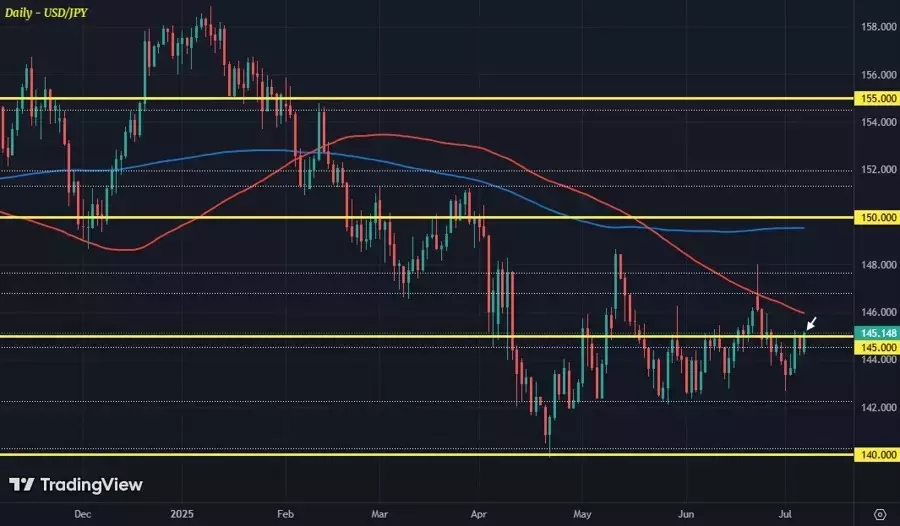
Looking ahead, the global financial landscape is poised for potential shifts driven by a renewed focus on international trade policies and the imposition of tariffs. This heightened attention to trade dynamics, alongside the underlying fiscal health of the U.S. economy, as reflected in bond yields, presents a complex picture for the dollar's trajectory. Despite the current firmness, the market environment is fraught with variables that could swiftly alter the currency's course. Investors are therefore urged to exercise caution and monitor these critical economic and political factors as they unfold.
Dollar's Resilience in Major Currency Pairs
The US dollar has commenced the trading day with a notable appreciation against its major counterparts, positioning itself as a leading performer in the global foreign exchange arena. This robust display of strength is particularly evident in its movements against the Euro and the Japanese Yen, where the dollar has seen significant gains. The EUR/USD pair, for instance, has declined, approaching critical option expiry levels. Simultaneously, the USD/JPY pair is actively testing resistance points, suggesting a potential continuation of its upward trend. This broad-based strengthening indicates a significant shift in market sentiment favoring the greenback, drawing considerable attention from traders and analysts.
The dollar's current assertive stance is largely attributed to the sustained positive impact of last week's non-farm payroll data, which continues to instill confidence in the U.S. economic outlook. This favorable data has provided a solid foundation for the dollar's advance, encouraging further buying interest. Beyond major currency pairs, the dollar's strength is also impacting commodity-linked currencies, with notable declines observed in pairs such as USD/CAD and AUD/USD. The strategic positioning of the dollar, particularly its proximity to key technical indicators and moving averages, suggests that market participants are evaluating the potential for further bullish movements, especially if the current momentum holds. The market's focus remains on how long this post-NFP impetus can sustain the dollar's upward trajectory in the face of evolving economic narratives.
External Pressures and Market Dynamics for the Dollar
While the dollar enjoys its current strengthening phase, its path forward is clouded by a series of external pressures and intricate market dynamics. The forthcoming week is anticipated to bring trade headlines and discussions around tariffs back into the spotlight, factors that have historically introduced volatility and uncertainty into currency markets. The policy environment, particularly the consistency and clarity of the current administration's economic directives, continues to be a point of concern. This ongoing policy fluidity has contributed to a cautious stance among investors, making the dollar susceptible to sudden shifts based on political developments. The market's collective short positioning on the dollar, a significant accumulation over several months, further complicates its outlook, indicating a potential for rapid and substantial upward price movements if these positions are forced to unwind.
Adding to the complexity are movements in the U.S. bond market, where rising Treasury yields signal underlying shifts in economic expectations and fiscal considerations. The 10-year Treasury yield's climb towards key resistance levels, marked by its 100-day and 200-day moving averages, highlights the increasing scrutiny on the U.S. fiscal situation. This scenario is generally viewed as a net negative for the dollar, as elevated yields can signal concerns about debt sustainability or inflationary pressures, potentially eroding investor confidence. Despite these headwinds and the dollar's challenging performance in recent months, the possibility of a short squeeze—a rapid increase in price due to short-sellers buying back positions—remains a tangible risk for those betting against the currency, suggesting that even in uncertain times, unexpected surges are always possible.