US Durable Goods Orders See Significant June Decline Amidst Transportation Sector Drop
New data reveals a substantial shift in the landscape of durable goods orders within the United States for June. After experiencing an impressive 16.5% increase in May, the sector saw a sharp reversal, with a reported 9.3% contraction in June, reaching a total of $311.8 billion. This significant downturn marks the steepest decline since April 2020, a period heavily impacted by global health crises. A primary contributor to this decrease was the transportation equipment category, which alone accounted for a 22.4% reduction, equating to a $32.6 billion fall in orders. In contrast, when the volatile transportation sector is excluded from the calculations, durable goods orders actually posted a modest rise of 0.2%.
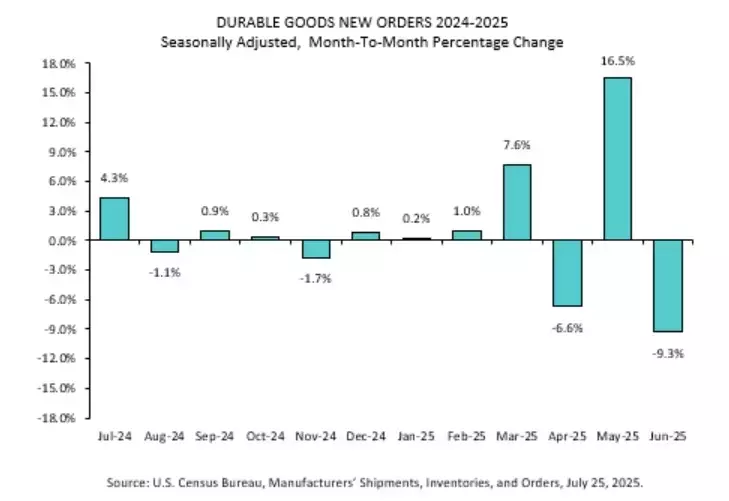
Further analysis of the recent economic figures highlights the nuanced nature of the manufacturing sector's performance. While overall durable goods orders saw a considerable dip, primarily due to the transportation component, a different picture emerges upon closer examination of other segments. Orders, when excluding defense-related items, also experienced a significant decline of 9.4%, suggesting broader adjustments within specific industrial areas. The persistent influence of large-ticket items, particularly within defense and aircraft manufacturing, on these monthly statistics is evident, reflecting broader policy impacts and trade considerations. These swings underscore the inherent volatility in economic indicators tied to such large-scale procurement.
The ebb and flow of economic indicators such as durable goods orders are vital barometers of the nation's industrial health. While fluctuations are a natural part of economic cycles, particularly in sectors prone to large, infrequent orders like transportation and defense, these numbers call for continued vigilance and adaptive strategies. Focusing on diversification and fostering growth across various manufacturing segments can help mitigate the impact of sharp declines in any single area. A resilient economy is built on a foundation of diverse and strong industries, consistently adapting to global and domestic shifts, ensuring sustained progress and prosperity for all."