US Mortgage Applications Plunge Amidst Rising Rates
The U.S. mortgage market recently experienced a substantial contraction, with a notable decline in application activity. This downturn is largely attributed to an uptick in mortgage rates, creating a less favorable environment for prospective homebuyers and those looking to refinance. The interconnectedness of interest rates and mortgage demand underscores the sensitivity of the housing sector to broader financial trends. Such movements are closely monitored by analysts, although their immediate impact on overall market dynamics is often considered minor.
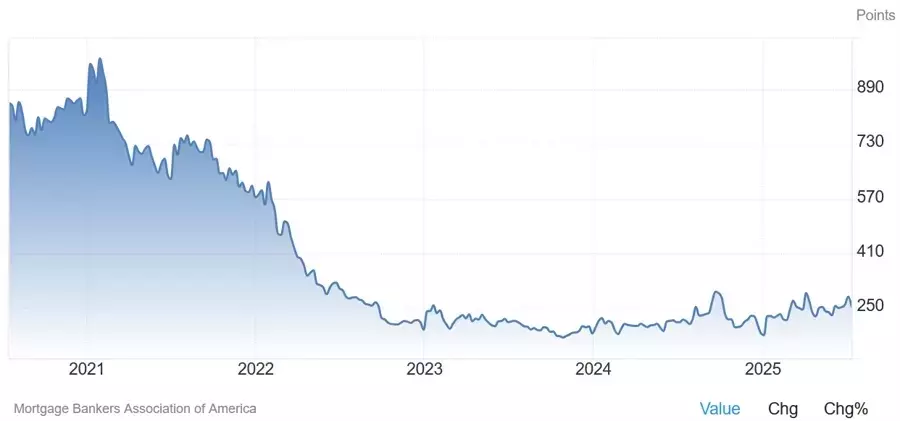
This latest data from the Mortgage Bankers Association provides a snapshot of current market conditions, highlighting a significant shift in borrower behavior. The decrease in both purchase and refinance applications indicates a broad-based cooling in mortgage activity. Understanding these shifts is crucial for stakeholders, as they reflect evolving consumer confidence and borrowing capacity in response to changing economic landscapes. While not typically a catalyst for major market shifts, these trends offer valuable insights into the health of the residential real estate sector.
Sharp Decline in Mortgage Activity
For the week concluding July 11, 2025, US mortgage applications saw a considerable reduction, plummeting by 10.0%. This marks a significant reversal from the preceding week, which had recorded a robust 9.4% increase. Concurrently, the average rate for a 30-year mortgage edged up to 6.82%, a slight increase from the previous 6.77%. This dual movement of declining applications and rising interest rates points to a tightening market, making borrowing less attractive for many.
The overall market index, a key indicator of mortgage activity, fell from 281.6 to 253.5, reflecting a broad-based slowdown. Digging deeper into the components, the purchase index decreased from 180.9 to 159.6, indicating fewer people were applying for loans to buy homes. Similarly, the refinance index dropped from 829.3 to 767.6, suggesting a reduced incentive for current homeowners to restructure their existing mortgages. These figures collectively illustrate a notable contraction in mortgage demand, a direct consequence of the escalating cost of borrowing, which has a direct influence on consumer decisions regarding homeownership and loan management.
Interest Rate Impact on Lending
The recent increase in the 30-year mortgage rate to 6.82% is a critical factor influencing the observed drop in mortgage applications. Historical data consistently shows an inverse relationship between mortgage rates and application volumes; as rates rise, demand for mortgages typically falls. This trend is a fundamental principle of the housing finance market, where affordability and borrowing costs play a pivotal role in consumer decision-making. Higher rates translate to increased monthly payments, which can deter potential buyers and reduce the financial benefit of refinancing.
This inverse correlation is vividly demonstrated by the latest figures, where a modest rise in rates precipitated a substantial decline in both new purchase and refinancing activities. The slight increase in the 30-year mortgage rate, though seemingly small, has a magnified effect on borrowers' long-term financial commitments, making home loans less accessible or desirable. This sensitivity highlights how even minor fluctuations in interest rates can significantly impact the mortgage market's vitality, affecting a wide array of economic activities from construction to real estate sales. Thus, while individual data points on mortgage applications may not always trigger major market shifts, their cumulative effect, particularly when aligned with interest rate movements, offers crucial insights into prevailing economic conditions.