US New Home Sales Slightly Exceed Expectations in June, Market Dynamics Shift
Navigating the Evolving Landscape of America's Residential Property Market
June's New Residential Property Transactions: A Closer Look at Figures and Expectations
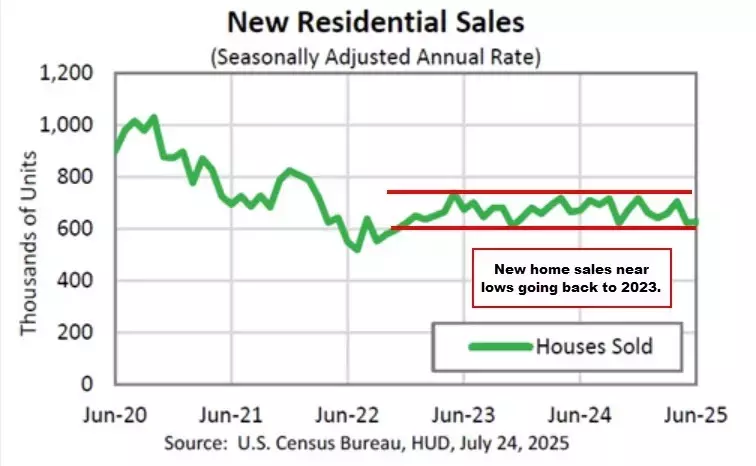
For June, the number of newly constructed homes sold in the United States reached 627,000 units. This figure represents a slight improvement from the revised total of 623,000 units in May. Despite this modest gain, the June sales volume did not meet the broader market's anticipation of 650,000 units, indicating a cooler-than-expected pace in the new housing sector.

Comparative Analysis: Sales Trends and Market Dynamics
The percentage change in new home sales for June showed a 0.6% increase, a significant turnaround from the preceding month's sharp 11.6% decline. This rebound suggests a degree of market stabilization, albeit at a slower rate than analysts had predicted. The inventory of available new homes stood at 511,000 units, marking a 1.2% rise, which contributes to the overall market supply.
Understanding Housing Supply and Buyer Demand
The measure of housing supply, indicated by the 'months' supply,' rose marginally to 9.8 months in June, up from 9.7 months in May. A higher months' supply generally points to an increased availability of homes relative to current buyer demand, often signaling a buyer's market or a cooling trend in sales activity. This elevated level suggests that the market has a substantial number of new homes awaiting purchase.
Fluctuations in Property Values: Median and Average Sales Prices
The median sale price for new homes in June was recorded at $401,800. This represents a 4.9% decrease from May's median price of $422,700 and a 2.9% reduction compared to June of the previous year's $414,000. Conversely, the average sale price in June was $501,000, which is 2% lower than May but 1.1% higher than June of the preceding year. These mixed price movements highlight varied dynamics within the new home market, potentially reflecting changes in the types of homes sold or evolving affordability conditions.
Interplay with Existing Home Sales Data
In a related development, data on existing home sales for June showed a total of 3.93 million units, slightly below the estimated 4.00 million and the 4.04 million recorded in the prior month. This provides additional context to the new home sales figures, illustrating a broader moderation across the residential property market. The performance of both new and existing home markets offers a comprehensive picture of the current housing landscape and its future trajectory.