Australia's Weak Jobs Report Signals Economic Headwinds and AUD Vulnerability
Labor Market Slowdown: A Bellwether for Economic Uncertainty
Decoding Australia's Employment Figures: A Stark Reality Check
The Australian employment report for the recent period unveiled a series of figures that fell significantly short of market projections. The unemployment rate climbed to 4.3%, surpassing the anticipated 4.1% and reaching its highest point since late 2021, signaling an emerging softness in the labor market. Furthermore, the net change in employment registered a meager increase of just 2,000 jobs, a substantial miss compared to the 20,000 jobs expected, highlighting a significant deceleration in hiring activity. Notably, the decline of 38,200 full-time positions was partially offset by a gain of 40,200 part-time roles, raising questions about the stability and quality of the newly created jobs.
Immediate Market Response: AUD Under Pressure Amid Rate Cut Speculation
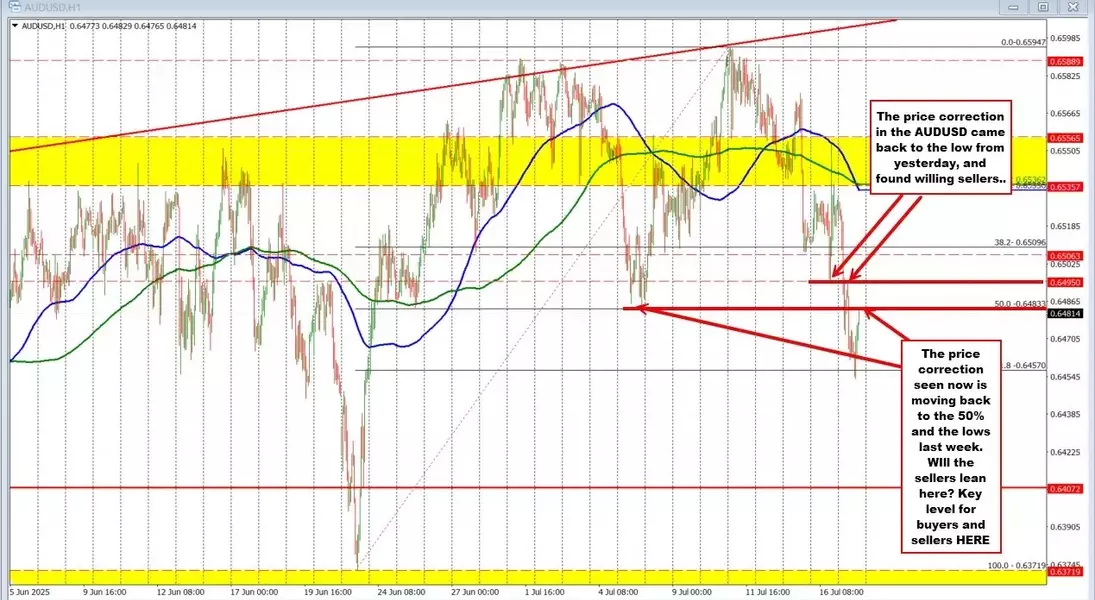
Following the release of the unexpectedly weak employment data, the Australian dollar experienced an immediate and significant depreciation against the US dollar. This downward movement in the AUD/USD currency pair largely stemmed from heightened market expectations of a potential interest rate cut by the Reserve Bank of Australia (RBA). Traders interpreted the poor job figures as a strong signal that the RBA might adopt a more dovish stance to stimulate economic activity, leading to a surge in bearish sentiment for the Australian currency. The initial reaction saw the pair breach key support levels, reflecting the market's swift repricing of Australia's economic trajectory.
Technical Analysis of AUD/USD: Navigating Key Levels After the Downturn
From a technical perspective, the AUD/USD pair's decline pushed it below the 38.2% Fibonacci retracement level at 0.65096 and the previous day's low of 0.6495. The next crucial support target, the 50% midpoint at 0.6483, was also briefly breached. The pair eventually found a temporary floor near 0.64535, just below the 61.8% retracement level from the June low at 0.6457. Subsequent trading saw a rebound towards the 50% midpoint and the lows from the prior week. For the AUD/USD to stage a more substantial recovery, it would need to convincingly break above these resistance points, specifically the 0.6495 and 0.6506-0.6509 range. However, past patterns suggest that such corrective rallies often encounter renewed selling pressure at these established resistance levels, as traders remain focused on the broader downside implications of the weaker economic data.
Future Outlook and Policy Implications: A Wary Path Ahead
The implications of this latest jobs report extend beyond immediate currency movements. The pronounced weakness in the labor market suggests that Australia's economic growth could face significant headwinds in the coming months. This scenario puts the Reserve Bank of Australia in a challenging position, potentially increasing the likelihood of a monetary policy adjustment, such as an interest rate cut, to counteract the economic deceleration. Market participants will closely monitor subsequent economic indicators and any communications from the RBA for further cues on the trajectory of the Australian economy and its impact on the AUD.