The Currency Conundrum: How Trade Tensions Shape the Dollar's Destiny
Unraveling the Dollar's Fate Amidst Turbulent Trade Winds
Amidst legal wrangles and shifting geopolitical landscapes, the US dollar finds itself at a crossroads. While judicial decisions may alter short-term dynamics, the broader implications of trade disputes persist, impacting investor sentiment and exchange rate patterns. This article delves into these intricacies, examining how interconnected factors influence currency markets.
Legal Crossroads: The Impact of Judicial Rulings on Dollar Dynamics
Recent developments in the US legal system have introduced new dimensions to the tariff debate. A federal appeals court overturned a prior ruling by the International Trade Court, escalating the matter to the Supreme Court for resolution. This protracted legal process underscores the complexity of determining constitutional boundaries within trade policy. Investors remain cautious, aware that any final verdict could reshape economic interactions significantly.
Beyond immediate market reactions, the prolonged uncertainty affects long-term investment strategies. Businesses planning cross-border operations must account for potential fluctuations in tariff structures, which can influence cost projections and profitability assessments. Consequently, this ambiguity contributes to the weakening of the dollar as investors seek stability elsewhere.
Interest Rate Differentials: A Catalyst or Constraint?
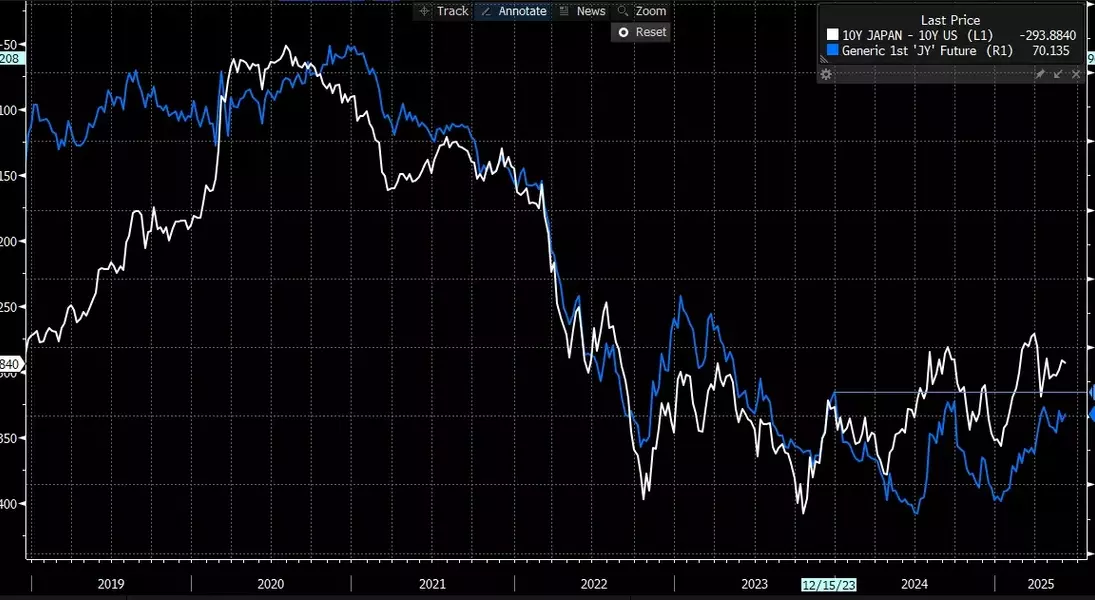
Despite the dollar's challenges, interest rate differentials continue to play a pivotal role in currency valuation. Notably, the divergence between US and Japanese 10-year yields has broken away from previous trends established since 2020. Historically, such spreads exhibited strong correlations with USD/JPY movements, suggesting that shifts here could herald broader changes in currency relationships.
Market participants keenly observe whether central banks adjust their monetary stances, particularly if the Bank of Japan permits greater flexibility in its interest rates. Such a move could amplify the significance of yield spread reversals, potentially altering the trajectory of various currency pairs. Understanding these dynamics becomes crucial for traders navigating volatile markets.
Technical Insights: Charting the Path of Key Currencies
From a technical standpoint, the EUR/USD pair demonstrates resilience, having tested support levels before rebounding toward recent peaks. Analysts anticipate consolidation around key thresholds, including 1.1675, where upward momentum might pause. Similarly, the GBP/USD maintains strength above its 55-day moving average, signaling bullish tendencies targeting ranges up to 1.4245.
In contrast, the USD/CHF and USD/JPY exhibit downward tendencies, aligning with broader market sentiments. For commodity-linked currencies like the CAD, AUD, and NZD, specific price points hold strategic importance. Breakouts or breakdowns through identified levels could catalyze significant directional shifts, underscoring the need for vigilant monitoring.
Commodity Currencies: Navigating Complex Market Forces
Commodity-driven economies face unique challenges amid fluctuating currency values. The USD/CAD approaches critical junctures, influenced by oil prices and broader macroeconomic indicators. Successive tests of support levels indicate underlying strength but require confirmation through sustained breaks above resistance zones.
Meanwhile, the Australian dollar navigates a sideways consolidation phase, awaiting catalysts to propel it higher. Conversely, the New Zealand dollar confronts pivotal resistance, where overcoming obstacles could validate technical patterns indicative of future appreciation. These nuanced interactions highlight the interplay between commodities, currencies, and global demand drivers.