Currency Markets React to Fed Rate Cut Speculation in Europe
Currency markets in Europe experienced notable shifts today, primarily driven by remarks from a Federal Reserve official suggesting a possible interest rate reduction in the near future. This sentiment has put downward pressure on the US dollar, causing it to retreat against several major currencies. The broader financial landscape reflects this uncertainty, with bond yields easing, while global equity markets show a cautious and varied performance. Precious metals and digital currencies, however, are largely holding steady or advancing, indicating a complex interplay of investor responses to evolving economic indicators and central bank pronouncements.
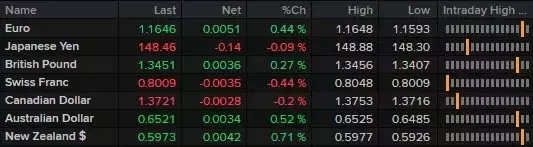
This dynamic environment underscores the sensitivity of global financial instruments to signals from key central banks. The prospect of a rate cut by the Federal Reserve, even if not yet fully priced in by futures markets, is creating ripples across asset classes, prompting traders to re-evaluate their positions. As the situation unfolds, market participants will be closely monitoring further economic data and central bank communications to gauge the trajectory of monetary policy and its implications for investment strategies.
Dollar Under Pressure from Rate Cut Speculation
The US dollar faced significant selling pressure during European trading hours, a direct consequence of Federal Reserve Governor Waller's recent comments indicating a potential interest rate cut as early as July. This unexpected dovish tone from a Fed official has caused the greenback to slide against a basket of currencies, prompting traders to re-evaluate their positions and challenge key support levels. The immediate market reaction suggests a growing belief that the Fed might adopt a more accommodative monetary policy sooner than previously anticipated, diverging from the current consensus reflected in Fed funds futures, which do not yet fully price in a July rate reduction.
This shift in sentiment has led to notable movements in major currency pairs. The EUR/USD pair advanced, breaking above its 100-hour moving average, signaling a more neutral short-term outlook for the euro against the dollar. Similarly, GBP/USD also climbed past its own 100-hour moving average, indicating renewed strength for the British pound. Commodity-linked currencies like the Australian dollar and Canadian dollar also registered gains, recovering some of their prior losses against the weakened greenback. This broad-based depreciation of the dollar highlights the market's sensitivity to even hints of policy shifts from the world's most influential central bank, leading to a recalibration of forex trading strategies and a watchful eye on upcoming economic releases and further Fed commentary.
Global Market Dynamics Amidst Policy Hints
Beyond the immediate currency fluctuations, Waller's remarks have influenced the broader financial landscape, contributing to a decline in bond yields and a mixed performance in equity markets. The yield on the 10-year US Treasury note fell, while 30-year yields also eased, reflecting investors' anticipation of lower interest rates. This downward movement in yields suggests a flight to safety or a repricing of future economic growth and inflation expectations in light of potential monetary easing. The bond market's reaction provides a strong signal of the financial community's interpretation of the Fed's potential path, emphasizing the intricate connection between central bank policy and debt market valuations.
In the equity markets, European indices, which initially showed strength, lost momentum throughout the session, with major benchmarks like the DAX and UK FTSE pulling back from their earlier gains and abandoning their pursuit of new record highs. US stock futures also maintained a cautious, largely flat stance, indicating an underlying uncertainty among investors regarding the economic outlook and corporate earnings in an environment of shifting monetary policy. Despite the volatility in traditional asset classes, gold prices showed resilience, holding firm above a key psychological level, while Bitcoin continued to trade near its recent highs, signaling sustained investor interest in alternative assets. This divergence underscores a nuanced market sentiment, where some assets benefit from lower interest rate expectations, while others grapple with broader economic uncertainties.