University of Michigan's July Consumer Sentiment Exceeds Expectations, Inflation Projections Decline
In a recent release from the University of Michigan, preliminary consumer sentiment data for July revealed a modest uptick, hinting at a cautious yet slightly improved outlook among American consumers. Despite this increment, the overall confidence levels are still notably below those observed in late 2024. A significant highlight from the report is the noticeable deceleration in inflation expectations, both for the immediate future and over a longer horizon. However, the lingering apprehension regarding potential price escalations suggests that a full recovery in consumer confidence hinges on sustained stability in economic policies and a continued easing of inflationary pressures.
University of Michigan Consumer Sentiment: A Detailed Look at July's Figures
On a serene Friday, the eighteenth of July, in the year 2025, the University of Michigan unveiled its preliminary consumer sentiment data for the month of July, offering a crucial snapshot of the American economic psyche. The headline figure for the consumer sentiment index registered a reading of 61.8, subtly exceeding the market's forecast of 61.5. This marks a marginal, yet noteworthy, improvement from the prior month's 60.7, positioning it at its highest point in a span of five months.
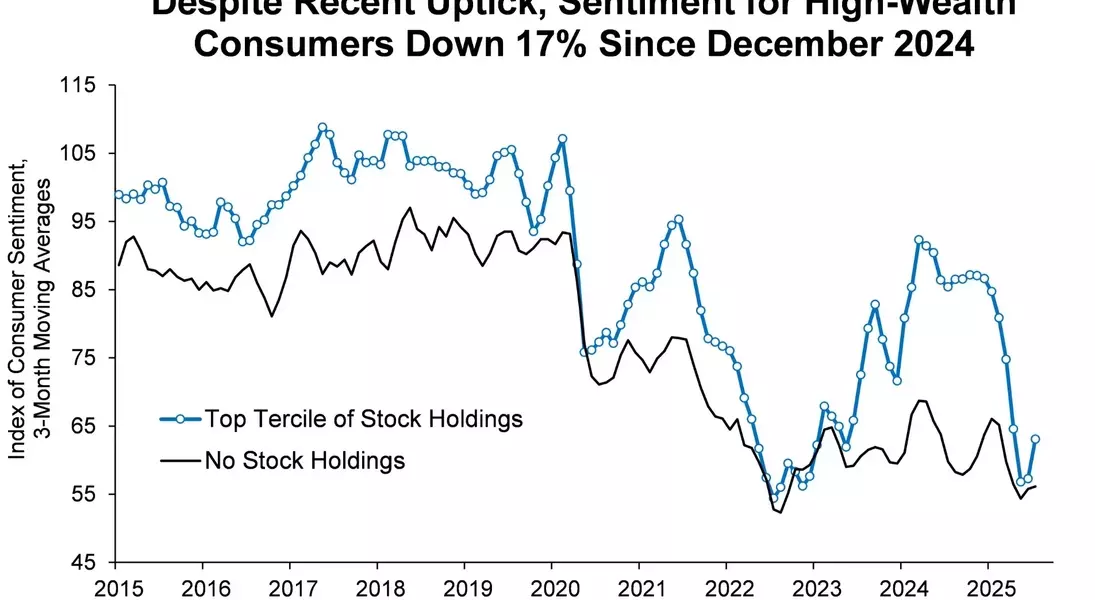
Dr. Joanne Hsu, the esteemed Director of Surveys of Consumers, meticulously detailed that while the overall consumer sentiment experienced only a minimal shift in July, climbing by merely a single point, this incremental rise should be viewed in context. Despite reaching a five-month zenith, the index conspicuously lags behind the robust sentiment recorded in December 2024, standing at a significant 16% decrement and considerably below established historical norms. A deeper dive into the report's intricacies reveals a mixed bag of consumer perceptions. Encouragingly, the short-run business conditions saw an impressive 8% surge, indicating a more optimistic view on immediate commercial prospects. However, this positive development was somewhat offset by a 4% decline in expectations regarding personal finances, underscoring a prevailing sense of financial uncertainty among households. Dr. Hsu underscored a critical prerequisite for a sustained rebound in consumer confidence: the imperative for inflation fears to substantially recede. She articulated that a more predictable and stable trade policy environment could play a pivotal role in assuaging these concerns. Furthermore, her analysis suggested that recent legislative actions, including a notable tax and spending bill, had exerted negligible influence on the prevailing consumer sentiment.
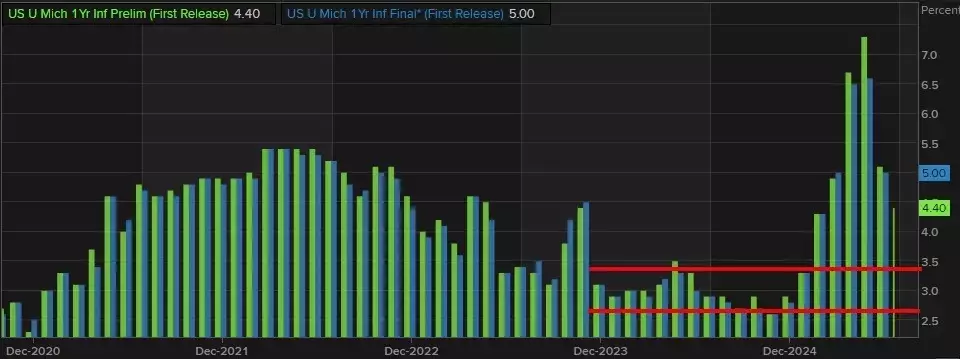
In a beacon of hope for economic stability, inflation expectations demonstrated a discernible improvement. The year-ahead inflation expectations experienced a sharp descent, dropping from 5.0% to a more moderate 4.4%. Concurrently, long-run inflation expectations also eased, moving from 4.0% down to 3.6%. Both these figures have now reached their nadir since February 2025, providing a glimmer of relief. Nevertheless, these improved projections still hover above the levels witnessed in December 2024, implying that a significant segment of consumers continues to harbor substantial apprehensions regarding a potential acceleration in inflationary trends. The persistence of these concerns, as highlighted by the historical data comparisons, suggests that despite recent positive movements, the journey towards fully stabilized consumer confidence and extinguished inflation fears is still ongoing, necessitating vigilant monitoring and responsive policy-making.
This latest report from the University of Michigan serves as a crucial barometer for the nation's economic health, offering nuanced insights into the intricate dance between consumer perception and broader economic indicators. It underscores the profound impact of inflation on household confidence and spending habits, reminding us that even marginal improvements are significant in the ongoing economic narrative. For policymakers and market observers alike, the data reinforces the necessity of addressing inflation head-on and fostering a predictable economic climate to truly unlock consumer potential and achieve robust, sustained growth.