Unsubstantiated Rumors of Powell's Resignation Barely Stir Financial Markets
A recent peculiar communication from William Pulte regarding Jerome Powell's purported resignation has caused barely a ripple in the often-volatile world of financial prediction markets. Despite the sensational claims, the market's reaction, particularly on platforms designed for such speculative bets, underscores the resilience against unverified information. This event highlights how even in a landscape susceptible to swift shifts based on sentiment, a lack of credible evidence can render attempts at manipulation largely ineffective.
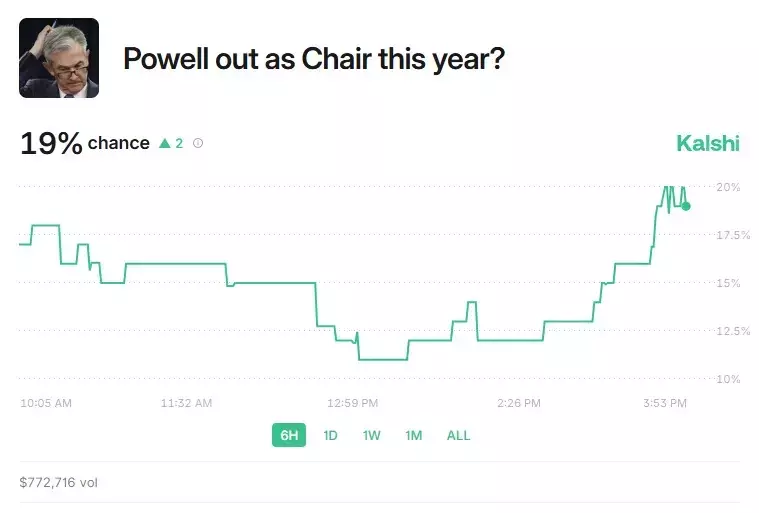
Details Emerge Regarding the Unverified Claims Surrounding Fed Chairman
On a recent Friday, specifically July 11, 2025, an unusual correspondence from William Pulte, affiliated with the FHFA, began to circulate within financial circles. This letter hinted at the possibility of Federal Reserve Chairman Jerome Powell contemplating his resignation, referencing unspecified 'reports'. However, a thorough investigation by numerous financial commentators and journalists, including our own, revealed a complete absence of any verifiable or reputable sources backing these claims. The prediction market platform, Kalshi, a site known for its responsiveness to even minor shifts in public perception, registered only a slight increase in the odds of Powell's departure, from an initial 14% to approximately 19%. This minimal movement, despite the low liquidity of the market, indicates a collective skepticism towards the unconfirmed narrative being propagated. It appears Mr. Pulte's letter may represent an attempt to unilaterally influence market sentiment, an endeavor that proved largely futile given the lack of genuine corroboration.
From a journalist's perspective, this incident serves as a crucial reminder of the importance of rigorous verification in the fast-paced financial news cycle. In an era saturated with information, the ability to discern credible sources from mere speculation is paramount. It also raises questions about the motivations behind such unsubstantiated 'reports' and the potential for individuals to attempt to sway markets through unconventional means. For the astute observer of financial trends, the market's muted response in this instance offers a reassuring testament to its inherent capacity for self-correction and its general resilience against groundless rumors, even when originating from seemingly official channels.