US Dollar Retreats Amidst Shifting Market Sentiment and Economic Data
Wednesday's trading session revealed notable shifts in the foreign exchange market, with the US dollar facing considerable downward pressure, especially during North American hours. This currency movement occurred amidst an otherwise subdued environment for bonds and equities, as global markets continued to process recent geopolitical events in the Middle East. The weakening dollar was largely influenced by a softer-than-anticipated new home sales report, which served as a minor catalyst, alongside a broader market re-evaluation of future interest rate adjustments.
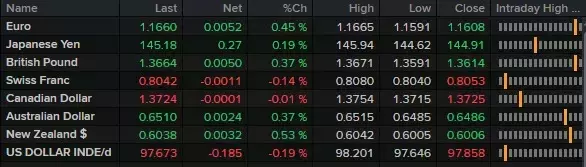
A key factor contributing to the dollar's depreciation was the evolving sentiment surrounding potential rate cuts. The market is now factoring in a more aggressive pace of cuts by year-end, reflecting a growing perception of either a softening economy or, more pertinently, a deceleration in inflation. This perspective is further bolstered by the recent decline in oil prices, which, despite a slight rebound, remain at levels conducive to mitigating inflationary pressures. Federal Reserve officials, including Chair Powell, maintained a 'wait-and-see' approach regarding monetary policy, yet the market appears to be anticipating a more accommodative stance. Upcoming economic releases, particularly the May PCE report, are expected to provide further clarity and test these market assumptions.
The dollar's slide translated into substantial gains for other major currencies. The Euro and the British Pound both reached their strongest levels since October 2021, underscoring the broad-based weakness of the US dollar. Similarly, the Australian and New Zealand dollars recorded their fourth consecutive day of gains, although they largely remained within their recent trading ranges. In contrast, the Japanese Yen lagged behind, despite some hawkish commentary from Bank of Japan officials earlier in the day. This could be attributed to a natural correction following significant movements in the preceding days, suggesting a period of consolidation for the Yen after recent volatility. The overall market activity points to a continuous rebalancing of global economic expectations and their impact on currency valuations.
In the intricate dance of global finance, the prevailing trends underscore the interconnectedness of various economic indicators and geopolitical developments. As markets adapt to evolving landscapes, the pursuit of informed decision-making remains paramount. This dynamic environment encourages resilience and foresight among market participants, fostering a proactive approach to economic challenges and opportunities. Ultimately, navigating these complexities with a keen understanding of underlying forces is crucial for achieving sustained growth and stability.