US Imposes 30% Tariff on Sri Lankan Imports, Escalating Trade Tensions
In a significant shift in international trade dynamics, the United States has recently imposed a substantial 30% tariff on products originating from Sri Lanka. This action marks a notable escalation in trade measures and is expected to have far-reaching implications for the economic relationship between the two countries. The core of this development lies in the existing robust trade ties, where Sri Lanka heavily relies on the U.S. as its primary export destination, particularly for its thriving apparel industry. This newly implemented tariff could fundamentally reshape the flow of goods and impact key sectors of Sri Lanka's export-oriented economy.
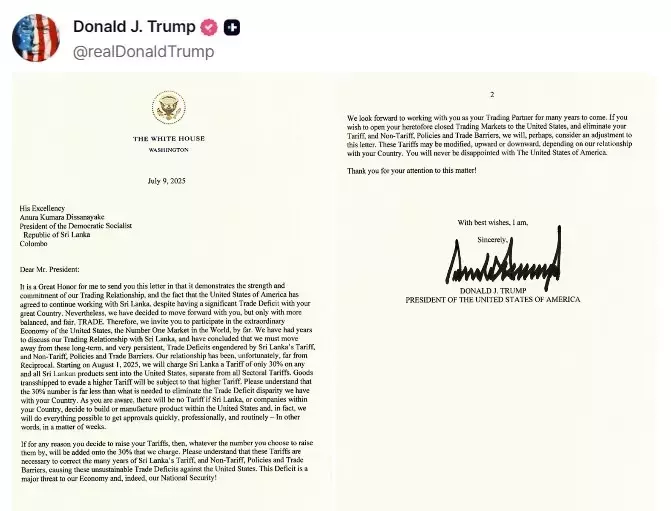
The trade relationship between the United States and Sri Lanka has historically been characterized by a considerable volume of exchanges, reaching an estimated total of $3.4 billion in 2024. A closer examination of these figures reveals a pronounced imbalance, with American imports from the island nation amounting to roughly $3.0 billion, while U.S. exports to Sri Lanka stood at a comparatively modest $368.2 million. This disparity resulted in a trade deficit of $2.6 billion, favoring Sri Lanka. This imbalance has likely been a contributing factor to the recent tariff decision.
A critical aspect of Sri Lanka's export portfolio to the U.S. is its dominance in the apparel sector. In 2024, clothing and textiles constituted over 70% of all Sri Lankan goods shipped to the American market. Beyond apparel, other notable exports include agricultural products such as tea, various rubber products, and seafood. The United States' role as Sri Lanka's single largest export market is underscored by the fact that it absorbed 23% of the country's total merchandise exports in the same year. This strong dependency makes Sri Lanka particularly vulnerable to changes in U.S. trade policy, and the new tariff is anticipated to create considerable economic headwinds for these vital industries.
The decision to levy a 30% tariff represents a considerable challenge for Sri Lanka, given its significant reliance on the U.S. market for its key exports. This measure is expected to lead to higher prices for Sri Lankan goods in the U.S., potentially diminishing their competitiveness and impacting demand. The long-term effects on Sri Lanka's economy and its ability to diversify its trade partnerships will be closely monitored as the implications of this tariff unfold.