USDJPY: Navigating Market Dynamics Amid US Data and Japanese Political Shifts
The USDJPY currency pair remains a focal point for global financial markets, poised at a critical juncture influenced by a confluence of macroeconomic data from the United States and significant political shifts within Japan. The recent trajectory of the US dollar, marked by a softer stance, reflects the market's positive response to favorable tariff news and a subdued inflation outlook. Conversely, the Japanese Yen's valuation is intricately tied to future US monetary policy and domestic inflation trends, which could either strengthen or temper its ascent. As investors weigh these factors, the pair's movement will also be highly susceptible to any new announcements regarding Japan's fiscal policies, which could alter economic forecasts and, consequently, interest rate expectations.
From a technical standpoint, the USDJPY pair has seen dynamic movements, initially retreating from a key resistance level before finding support and beginning a recovery. This highlights the ongoing battle between buyers and sellers, each aiming to establish dominance. Market participants are meticulously observing crucial support and resistance zones, which will dictate short-term directional biases. The interplay between fundamental drivers, such as economic reports and policy changes, and technical indicators, including daily and hourly price action, will be paramount in determining the pair's path forward, emphasizing the need for traders to remain agile and responsive to shifting market conditions.
Fundamental Forces Shaping USDJPY
The USDJPY exchange rate is currently positioned at a pivotal resistance point, with its future direction heavily reliant on upcoming economic reports from the United States and significant political developments in Japan. The US dollar has exhibited a softer tone recently, a consequence of positive news regarding trade tariffs and inflation figures that fell below projections. This combination has fostered a positive risk appetite among investors. Despite expectations for two Federal Reserve rate cuts by year-end, the market has largely remained within a constrained range, indicative of a lack of substantial changes in underlying conditions over recent weeks.
On the Japanese Yen side, the latest Tokyo Consumer Price Index (CPI) data released today disappointed, registering lower than anticipated. This outcome did little to bolster the Yen, especially since a rate hike by year-end was already largely factored into prices following the trade agreement between the US and Japan. For the Yen to experience further appreciation, a notable weakening in US economic data would be necessary to amplify dovish expectations for the Federal Reserve, or, alternatively, Japan would need to report higher inflation figures that necessitate more aggressive rate hikes than currently projected. Additionally, the evolving political landscape in Japan warrants close observation; any news suggesting increased fiscal support could lead markets to anticipate stronger economic activity, thereby increasing the probability of additional rate adjustments by the Bank of Japan.
Technical Outlook for the USDJPY Pair
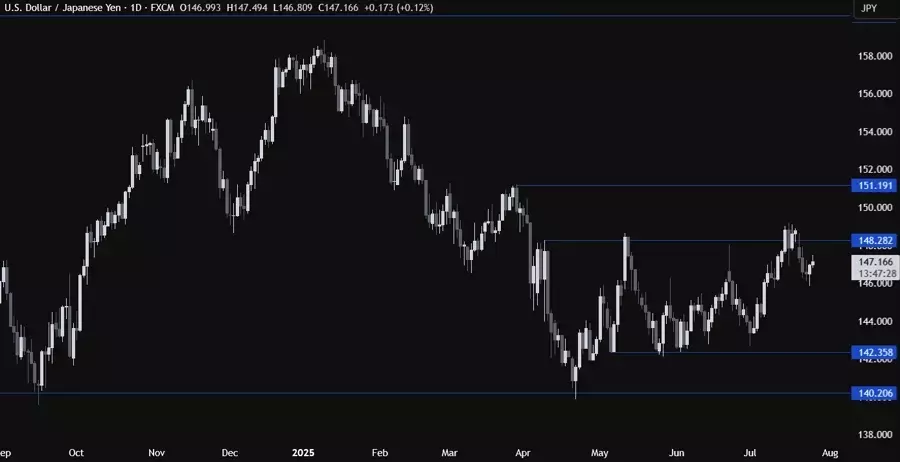
Analysis of the daily chart for the USDJPY pair reveals that it eventually receded below the crucial 148.30 resistance level, extending its decline to the 146.00 mark before staging a rebound. Traders anticipating a downside movement are likely to establish selling positions around the 148.28 resistance, setting their risk parameters just above this point, with an eye towards a potential drop to the 142.35 support level. Conversely, those seeking bullish opportunities will be looking for a decisive breach above the current resistance to embolden their long positions, aiming for the next significant resistance at 151.20.
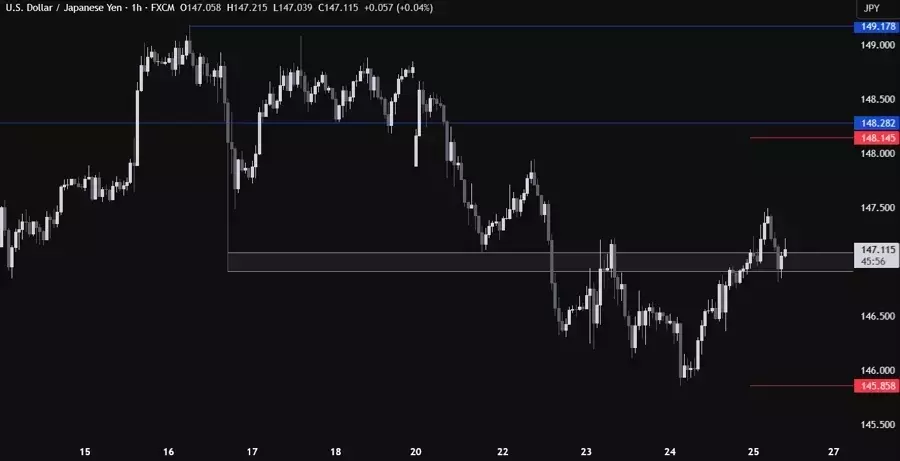
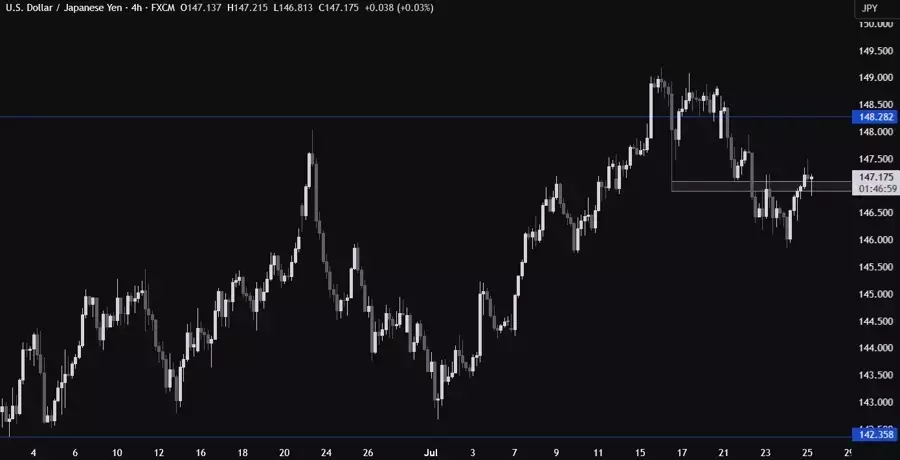
Examining the 4-hour chart, a minor resistance zone around 147.00 has transitioned into a support area. Buyers are expected to accumulate positions around these levels, managing their risk with stops placed below this newfound support, and maintaining targets for a breakout above the 148.28 resistance. Conversely, sellers will be monitoring for a definitive move below the current support to intensify their bearish strategies, with a clear objective of reaching the 142.35 support. On the 1-hour chart, there is limited additional technical insight; buyers will continue to seek opportunities to buy on dips near support levels, while sellers will remain vigilant for a downside breakout that could push the pair to new lows. The red lines on the chart clearly delineate the average daily range for the current trading session, providing further context for intraday movements.