Former Fed Governor Warsh Advocates for Immediate Rate Cut
In a notable revelation, Kevin Warsh, a former influential member of the Federal Reserve's Board of Governors, has publicly voiced his support for a reduction in interest rates, emphasizing that such a move would be his vote if he still served on the Federal Open Market Committee. This pronouncement carries significant weight as it surfaces just days before the highly anticipated FOMC meeting, where the prevailing sentiment among financial observers is that interest rates will likely be maintained at their current levels. Warsh's comments, made during a high-profile television interview, have sparked considerable discussion regarding the motivations behind his stance, with some speculating it could be linked to aspirations for the prestigious position of Federal Reserve Chair.
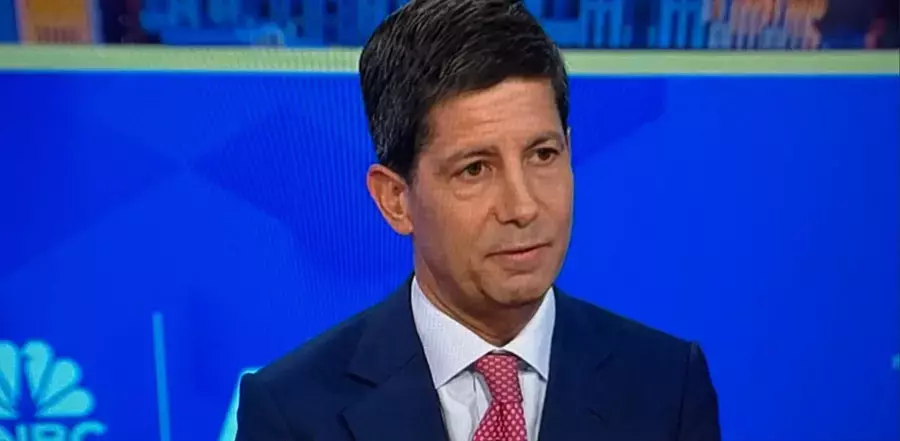
Former Federal Reserve Governor Kevin Warsh's Bold Stance on Interest Rates
During a revealing interview broadcast on a prominent news channel, Kevin Warsh, who previously served with distinction on the Federal Reserve's Board of Governors from 2006 to 2011, declared that he would unequivocally endorse a cut in interest rates at the upcoming Federal Open Market Committee (FOMC) meeting, scheduled for July 29th and 30th. This declaration from a seasoned veteran of central banking introduces a new dynamic into the ongoing discourse surrounding the nation's monetary policy. While market analysts widely anticipate that the FOMC will opt to keep rates stable, Warsh's perspective challenges this consensus, asserting that a rate reduction would be beneficial for the economy.
His remarks have inevitably led to speculation regarding his potential future ambitions. Given the timing and the platform, many observers interpret Warsh's assertive advocacy for a rate cut as a strategic maneuver to align himself with the current administration's perceived economic preferences, potentially positioning himself as a viable candidate for the leadership of the Federal Reserve should the opportunity arise. He even articulated that he would be deeply honored if the President considered him for the top role at the Fed. However, it is also plausible that his conviction stems from a genuine belief in the economic necessity and wisdom of such a policy adjustment, independent of political considerations.
The upcoming FOMC meeting will undoubtedly be under intense scrutiny, not only for the committee's decision on interest rates but also for any subtle shifts in rhetoric that might reflect or respond to the kind of viewpoints expressed by prominent figures like Kevin Warsh. The interplay between expert opinion, political currents, and economic realities continues to shape the intricate landscape of global finance.
From a journalist's vantage point, this development highlights the constant dance between monetary policy and political influence. Warsh's willingness to openly discuss his hypothetical vote on a rate cut, particularly when the prevailing expectation is for no change, underscores the complex considerations that former policymakers face. It begs the question of whether such public statements are purely analytical or, as is often the case in the high-stakes world of central banking, carry an underlying strategic purpose. For the astute observer of financial markets and political machinations, Warsh's comments serve as a fascinating case study in how former officials navigate their post-service careers, often remaining influential voices in the very fields they once governed.