Hassett's Assessment: US Inflation Data and Federal Reserve's Policy Path
In a significant economic discourse, Kevin Hassett, a distinguished economic advisor, has provided a nuanced perspective on the current inflationary landscape in the United States. His remarks underscore a crucial period for the Federal Reserve, advocating for a recalibration of its strategic approach to monetary policy. This development takes place amidst ongoing speculation about leadership changes at the nation's central bank, where Hassett himself is considered a notable candidate for the top position.
Economic Insights and Federal Reserve's Future Direction
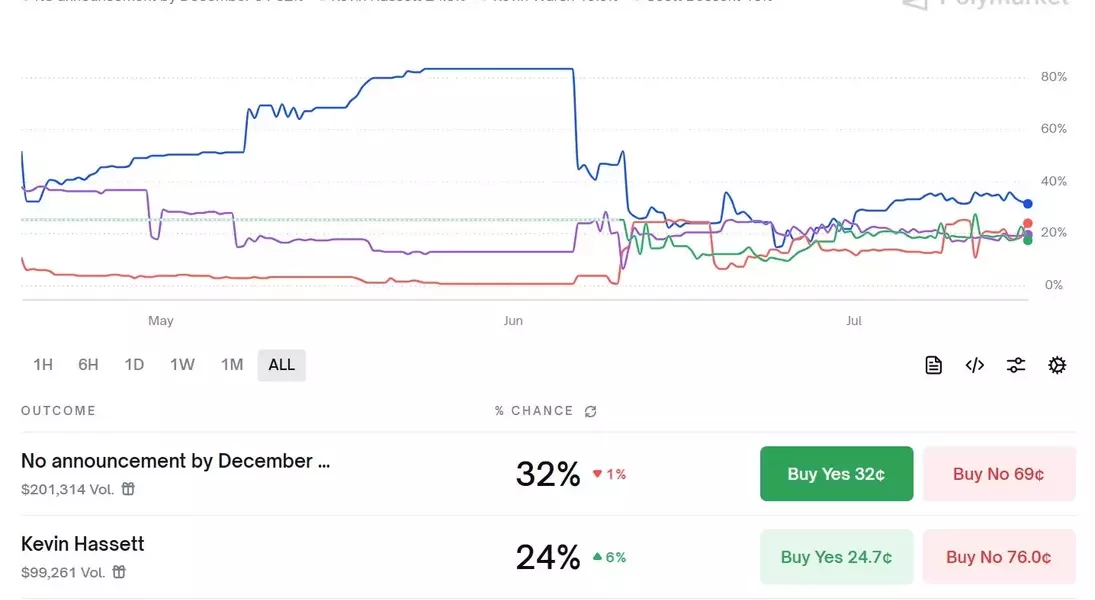
During a recent address on Wednesday, July 16, 2025, economic advisor Kevin Hassett delivered pivotal insights into the current state of the U.S. economy. Hassett asserted that the nation's inflation figures have remained within a manageable range, suggesting a degree of stability in price levels. However, his remarks quickly shifted to the imperative role of the Federal Reserve, stressing that the central bank must realign its policies to effectively navigate the evolving economic climate. This call for policy adjustment highlights a critical juncture for the Fed, implying that its current stance may not be optimally suited for the future. Furthermore, the discourse gains additional weight from the ongoing speculation surrounding the next Federal Reserve Chair. Hassett is frequently cited among the leading candidates for this esteemed position, and predictions from platforms like Polymarket indicate a considerable likelihood of his nomination by the close of the year. Nevertheless, a strong undercurrent of uncertainty persists, with a significant portion of market observers anticipating no new chair appointment before the year's end.
From the perspective of an informed observer, Hassett's statements serve as a potent reminder of the intricate dance between economic data and monetary policy. His assertion that inflation data is 'fine' could be interpreted as a cautious optimism, acknowledging the current situation without dismissing the underlying need for vigilance. The emphasis on the Federal Reserve 'getting back on the curve' suggests a call for proactive and responsive policymaking, rather than a reactionary approach. This implies that the Fed must not only monitor present economic indicators but also anticipate future shifts to maintain stability and foster growth. Moreover, the speculation surrounding Hassett's potential appointment as the next Fed Chair adds another layer of intrigue. It highlights the profound impact that individual leadership can have on the trajectory of national and global economic policies. Regardless of who ultimately assumes the role, the imperative remains clear: the Federal Reserve must be agile and decisive in its efforts to ensure a robust and stable economic future.