Hong Kong Monetary Authority Bolsters Currency Amidst Market Pressures
The Hong Kong Monetary Authority (HKMA) is once again demonstrating its steadfast commitment to maintaining the stability of the Hong Kong Dollar (HKD). In a recent move, the HKMA intervened significantly in the foreign exchange market by acquiring 14.8 billion HKD. This decisive action underscores the central bank's ongoing efforts to uphold the currency's peg to the U.S. dollar, a system that has been a cornerstone of Hong Kong's financial stability since 1983. The intervention highlights the challenges faced by the HKD as it hovers near the weaker boundary of its established trading band against the greenback, a situation that necessitates proactive measures to preserve investor confidence and market equilibrium.
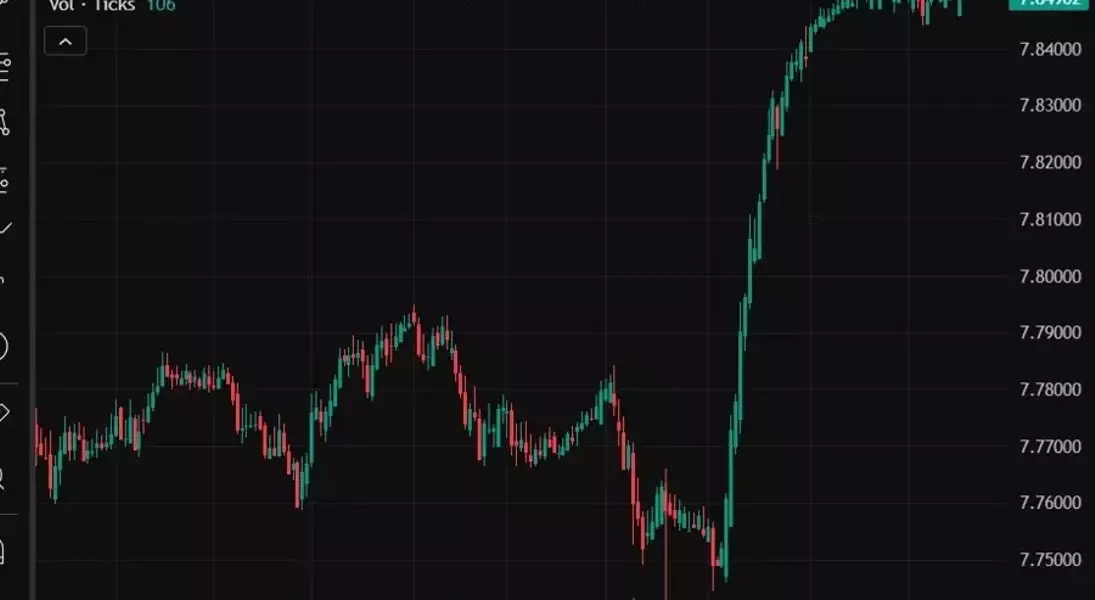
Hong Kong Monetary Authority's Proactive Defense of Currency Stability
On a pivotal day, Tuesday, July 15, 2025, the Hong Kong Monetary Authority (HKMA) initiated a substantial intervention in the foreign exchange market. This strategic move saw the HKMA procure an impressive 14.8 billion Hong Kong Dollars (HKD). This action was taken to counteract persistent downward pressure on the local currency, which was observed to be trading at the uppermost limit of its permitted range against the U.S. dollar—effectively, the weaker end of its established trading band.
Since 1983, Hong Kong has operated under a unique Linked Exchange Rate System (LERS), which firmly pegs the HKD to the U.S. dollar. This system allows for a narrow trading corridor, specifically between 7.75 and 7.85 HKD per U.S. dollar. The HKMA's recent intervention is a classic application of its automatic adjustment mechanism, designed to ensure the HKD remains within this critical band. Under the Currency Board System, every HKD in circulation is fully backed by U.S. dollar reserves, linking the monetary base directly to foreign exchange flows.
The mechanics of this intervention are clear: when the HKD approaches the weaker threshold of 7.85, the HKMA steps in by purchasing HKD and selling U.S. dollars. This process effectively withdraws liquidity from the financial system, thereby strengthening the HKD and preventing it from breaching its lower limit. Conversely, if the HKD were to approach the stronger side (7.75), the HKMA would sell HKD and buy U.S. dollars, injecting liquidity to stabilize the currency.
This latest intervention by the HKMA serves as a robust signal to the market, reaffirming its unwavering commitment to the stability of the Hong Kong dollar. It demonstrates the central bank's readiness to deploy its substantial reserves and established mechanisms to defend the currency peg, a vital component of Hong Kong's economic framework and its appeal to global investors.
From a journalist's vantage point, this ongoing narrative of the HKMA's interventions provides a fascinating insight into the delicate balance central banks must strike in a highly interconnected global economy. It highlights the inherent challenges of maintaining a fixed exchange rate system, especially during periods of market volatility or shifting economic landscapes. The HKMA's consistent and transparent approach to defending the HKD's peg offers a valuable lesson in monetary policy, emphasizing the importance of clear communication and decisive action to preserve financial stability. For observers of international finance, it underscores the strategic significance of Hong Kong's currency policy, not just for its own economy, but as a barometer for broader regional and global financial health. The repeated interventions, while perhaps routine for the HKMA, are anything but mundane, as each action reaffirms a foundational commitment to economic predictability in an unpredictable world.