Jamie Dimon on Potential US Interest Rate Hikes: A 40-50% Likelihood
Jamie Dimon, the influential head of JPMorgan Chase, has voiced a significant concern regarding the future trajectory of U.S. monetary policy, suggesting a substantial likelihood of further interest rate hikes. This perspective challenges conventional market expectations that have largely anticipated rate cuts, aligning instead with a more hawkish view on inflationary pressures. Dimon's analysis highlights several critical economic factors that, in his estimation, could compel the Federal Reserve to reconsider its approach and potentially raise borrowing costs, rather than reduce them. This assessment from a prominent financial leader underscores the complex and uncertain economic landscape currently facing the United States.
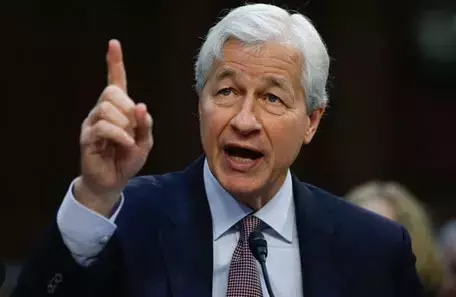
His commentary arrives at a time when global economic stability is under intense scrutiny. Dimon identifies tariffs, shifting migration patterns, and persistent government budget deficits as primary drivers of inflation. These factors, he argues, are not fleeting but rather entrenched elements that will continue to exert upward pressure on prices. Consequently, the Federal Reserve might find itself in a position where it must tighten monetary policy further to combat inflation, even if such actions could impact economic growth. This outlook contrasts sharply with forecasts centered on rate reductions, painting a picture of an economy grappling with sustained inflationary forces that demand a robust response.
The Potential for Higher Interest Rates
Jamie Dimon, the Chief Executive Officer of JPMorgan Chase, has offered a noteworthy projection regarding the future direction of US interest rates, positing a 40-50% probability of further increases by the Federal Reserve. This assertion starkly contrasts with the prevalent market sentiment that has largely anticipated rate reductions. Dimon's outlook is rooted in an analysis of several underlying inflationary pressures that, in his view, are not transient but rather deeply embedded within the economic framework. His insights suggest that the central bank may be compelled to adopt a more aggressive stance to counter these forces, moving away from a dovish bias and towards continued monetary tightening.
Dimon's assessment underscores a critical debate within economic circles about the long-term inflationary impact of current global and domestic policies. He meticulously outlines specific factors contributing to this inflationary environment: the imposition of tariffs, which directly increase import costs and reduce competitive pressures; evolving US migration policies, which can influence labor supply and wage growth; and the persistent growth of the budget deficit, which injects liquidity into the economy and can fuel demand. Each of these elements, according to Dimon, acts as a significant propellant for inflation, making a case for the Federal Reserve to consider a more hawkish policy in the foreseeable future. This perspective offers a sobering counterpoint to the optimistic forecasts of imminent rate cuts, suggesting that the path of least resistance for the Fed might involve further tightening to achieve its inflation targets.
Inflationary Drivers and Economic Concerns
The core of Jamie Dimon's argument for potential interest rate hikes rests on a clear identification of several key inflationary drivers. He contends that various structural and policy-induced factors are contributing to persistent price pressures within the U.S. economy. Tariffs, for instance, are highlighted as direct contributors to inflation, as they increase the cost of imported goods, which then trickle down to consumers. Similarly, changes in US migration policies can influence labor market dynamics, potentially leading to wage inflation and increased operational costs for businesses. Furthermore, the burgeoning federal budget deficit, by expanding the money supply and stimulating demand, adds another layer of inflationary impetus.
These identified sources of inflation present a formidable challenge to the Federal Reserve's mandate of maintaining price stability. Dimon suggests that these are not merely temporary disruptions but rather systemic issues that could necessitate a more forceful monetary policy response. The combination of these factors creates an environment where inflationary pressures are not easily subdued, making it difficult for the Fed to ease its stance. Consequently, the possibility of higher interest rates emerges as a pragmatic measure to cool down an overheating economy and curb rising prices. This viewpoint implies that economic stability might demand difficult choices from policymakers, potentially prioritizing inflation control over stimulating growth through lower rates, especially if the current inflationary trends prove to be more durable than anticipated by some observers.