New Zealand's Inflation Data for Q2 2025 Falls Below Expectations
New Zealand's recent inflation figures for the second quarter of 2025 indicate a slight moderation in price growth, coming in marginally below market predictions. This economic update has garnered significant attention from financial analysts and market participants, particularly concerning its immediate effects on the nation's currency and bond yields. The detailed report provides a nuanced perspective on the underlying components of inflation, distinguishing between goods and services subject to international trade and those primarily influenced by domestic factors. Understanding these distinctions is crucial for comprehending the broader economic implications for New Zealand's financial landscape and future monetary policy considerations.
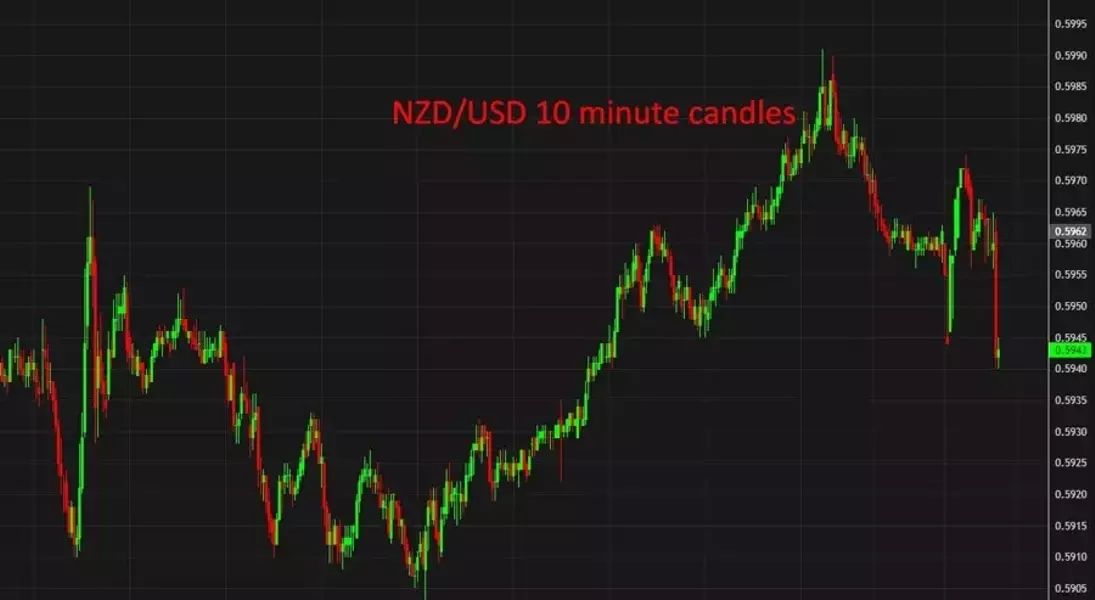
The Consumer Price Index (CPI) for New Zealand's second quarter of 2025 registered a quarterly rise of 0.5%, which was a touch lower than the projected 0.6%. This figure also represents a deceleration from the previous quarter's 0.9% increase. On an annual basis, the CPI climbed by 2.7%, missing the 2.8% expectation, although it marked an acceleration from the preceding 2.5% annual rate. This nuanced outcome suggests a complex interplay of economic forces shaping the country's inflationary trajectory.
A deeper dive into the inflation components reveals that tradable goods, which are those exchanged on international markets, saw a quarterly increase of 0.3% in their CPI, falling short of the 0.5% forecast and significantly lower than the prior quarter's 0.8%. Conversely, non-tradable goods and services, whose prices are primarily determined by domestic conditions, recorded a 0.7% quarterly rise in their CPI, aligning with expectations but slowing from the previous 1.1% increase. These disparities highlight the different pressures on prices within the New Zealand economy.
Following the release of this data, the New Zealand dollar (NZD) experienced a decline against other major currencies, and the yields on New Zealand government bonds also saw a decrease. This market reaction aligns with earlier expert commentary suggesting that a softer inflation report would likely exert downward pressure on the NZD, while potentially offering a supportive environment for New Zealand's equity market. The intricate relationship between inflation data and currency/bond market performance underscores the sensitivity of financial markets to economic indicators.
The terms 'tradable' and 'non-tradable' inflation delineate the sources of price changes based on their exposure to international commerce. Tradable inflation encompasses goods and services that are bought and sold across borders, such as crude oil, metals, agricultural commodities, and manufactured goods like electronics. Their prices are heavily influenced by global market dynamics, exchange rates, and international supply and demand. Consequently, shifts in the global economic landscape or currency valuations can directly impact tradable inflation within a country. For instance, a worldwide increase in oil prices will directly contribute to tradable inflation in oil-importing nations.
In contrast, non-tradable inflation pertains to goods and services that are primarily consumed within the domestic economy and are not subject to international trade. Examples include healthcare services, educational fees, and local utility costs, as well as goods where transportation costs are prohibitively high relative to their value. The pricing of these items is predominantly shaped by internal economic factors, including domestic wage levels, real estate rents, and government policies. While generally more stable than tradable prices, non-tradable inflation can still exhibit significant variations between countries due to differing local labor market conditions and regulatory frameworks.
In sum, the lower-than-anticipated inflation figures for New Zealand's second quarter of 2025, driven by both tradable and non-tradable components, have prompted market adjustments. The distinct characteristics of tradable and non-tradable inflation, with the former being influenced by global forces and the latter by domestic factors, provide a comprehensive framework for understanding the nation's overall price trends. This latest economic data offers valuable insights into New Zealand's current economic health and its potential future direction.