Crude Oil Market Dynamics: Price Reaches $67.93 Despite Increased OPEC+ Output
The global oil market experienced an interesting turn recently, with crude oil prices closing higher despite a significant increase in supply from major producers. This development reflects the complex interplay of supply-side decisions and broader market sentiments influencing commodity values. Observers are closely monitoring these shifts to understand the underlying resilience of demand in the face of expanded output.
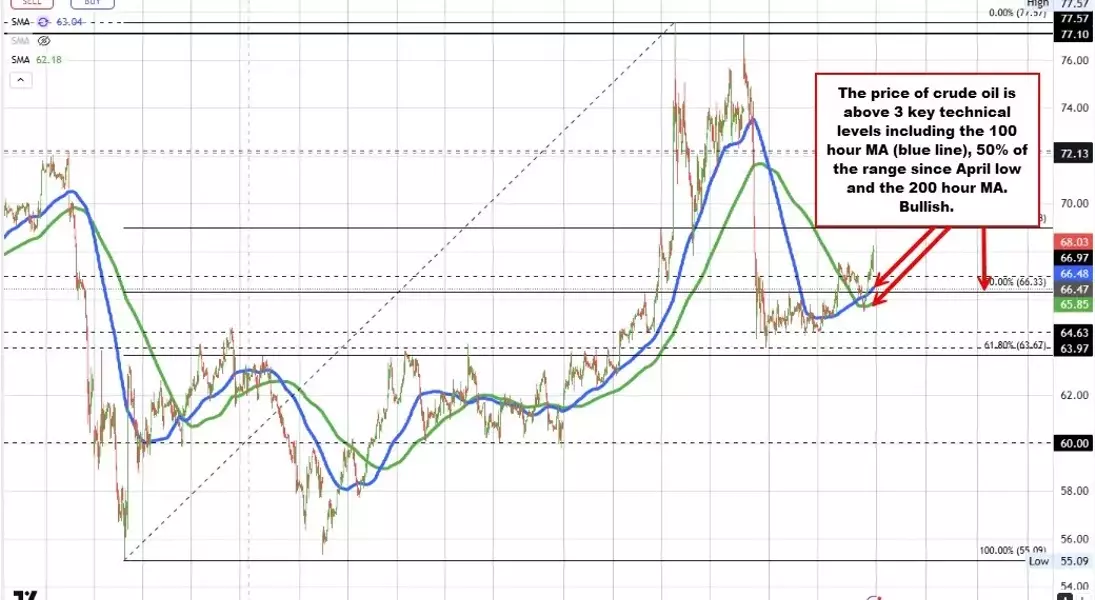
On July 7, 2025, the value of crude oil climbed, concluding the trading session at $67.93, which represented an appreciation of $0.93 or 1.39%. Notably, the day's trading saw the price ascend to $68.28, marking its highest point since June 23. This price movement took place amidst an announcement from OPEC+ regarding an acceleration in their production ramp-up.
Initially, OPEC+ had been expected to augment their daily output by 411,000 barrels as part of their strategy to gradually unwind the voluntary 2.2 million barrels per day production cuts. However, the collective opted for an even more substantial increase, adding 548,000 barrels per day to the market. This larger adjustment signals the group's perspective on global economic conditions and market health.
In an official communiqué, the alliance cited a robust global economic outlook and strong market fundamentals, evidenced by reduced oil inventories, as reasons for their decision. This aligns with their prior commitment made on December 5, 2024, to progressively and flexibly phase in the previously curtailed 2.2 million barrels per day of voluntary production adjustments.
From a technical analysis perspective, the current price positioning of crude oil indicates a struggle between bullish and bearish forces. The commodity's value remains below key technical thresholds, specifically its 100-hour moving average at $66.48, the 50% retracement level from the April low to the June high at $66.33, and the 200-hour moving average at $65.85. For a significant bearish shift to materialize, prices would need to decisively break below these indicators. Conversely, as long as these levels hold as support, the prevailing momentum suggests that buyers retain an advantage in the market.
The recent ascent in crude oil prices, despite the increased supply from OPEC+, underscores the current equilibrium in the energy markets. The collective's decision to boost production more aggressively than anticipated signals their confidence in sustained demand and healthy global economic conditions. Moving forward, the market will likely focus on whether prices can maintain their position above crucial technical support levels to determine the next major trend.