Fed Governor Waller's Cautious Stance on Economic Outlook and Monetary Policy
Federal Reserve Governor Christopher Waller has offered a discerning assessment of the current economic landscape, suggesting that the underlying strength of the private sector may not be as robust as commonly perceived. His comments delve into various facets of the economy, including the fragility of the labor market, the nuanced effects of trade tariffs, and the imperative for the central bank to uphold its credibility in managing inflation. Waller's perspective underscores a potential divergence from more optimistic views, emphasizing the need for careful consideration in policy formulation, particularly concerning interest rates and the broader economic stability. He hinted at the possibility of a dissenting vote in upcoming Federal Open Market Committee meetings, signaling an active and independent voice within the Fed's decision-making process.
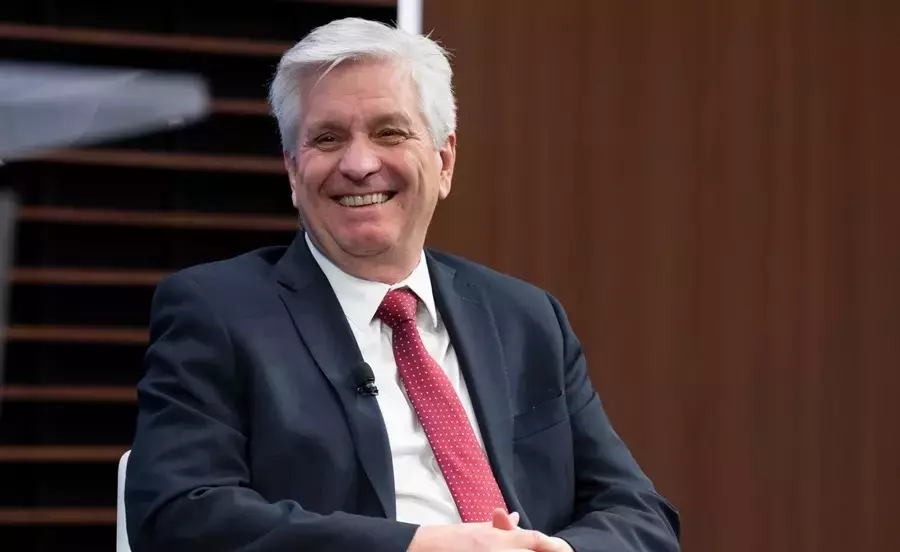
Waller's analysis of the labor market indicates that while headline statistics appear satisfactory, the underlying conditions are more vulnerable to negative shifts. He noted that even minor disruptions could significantly impact employment figures, a concern echoed by business executives who report neither increasing nor decreasing their workforce. This suggests a cautious hiring environment, contrasting with the often-cited strength of the job market. His remarks imply that the current employment stability might be more fragile than headline numbers suggest, demanding vigilance from policymakers.
Regarding tariffs, Governor Waller provided a comprehensive view, characterizing them as a form of taxation whose burdens are distributed across various economic groups. He emphasized the necessity of examining the short-term inflationary effects of tariffs, specifically looking at three-month and six-month inflation data. While acknowledging that some tariff costs would inevitably be passed on to consumers, he posited that this would not lead to persistent inflationary pressures unless there was a continuous escalation of tariff rates. This nuanced take on tariffs highlights their complex interplay with consumer prices and overall economic stability.
A significant part of Waller's discourse focused on monetary policy and the integrity of the Federal Reserve. He underlined the importance of maintaining the Fed's credibility, asserting that a loss of trust could lead to an uncontrolled surge in inflation expectations. Although he expressed a desire to avoid a hard landing for the economy, he also indicated that delaying an interest rate cut by six weeks might not be critical, suggesting a degree of flexibility. However, he found no compelling reason to postpone such a move. His openness to dissent within the Federal Open Market Committee (FOMC) underscores a healthy internal debate, which he believes is rooted in economic arguments rather than political considerations.
Waller's dovish stance, consistent with his previous positions, means his advocacy for potential rate cuts in July or his focus on downside risks might not carry the same weight as they once did. He is anticipated to be a solitary dissenter, or possibly joined by Governor Bowman, at the upcoming July FOMC meeting, as they are currently the most dovish members of the committee. This internal dynamic reflects differing interpretations of economic data and optimal policy paths within the central bank, ultimately influencing market expectations and future economic trajectory.
In summary, Governor Waller's recent statements provide a detailed insight into the Federal Reserve's internal deliberations and its careful approach to economic management. His cautious outlook on the labor market's true resilience, coupled with his balanced assessment of tariff impacts on inflation, paints a picture of a central banker acutely aware of both the apparent and underlying economic realities. The emphasis on maintaining institutional credibility and fostering robust debate within the FOMC reflects a commitment to sound economic stewardship, even as differing opinions on immediate policy actions come to the fore.