Trump's Bold Move: 50% Copper Tariff on the Horizon
In a significant policy shift, former President Donald Trump is set to implement a sweeping 50% tariff on imported copper, with the measure slated to take effect on August 1, 2025. This bold economic initiative is a direct consequence of a recent national security review, underscoring a strategic intent to bolster America's internal capabilities in copper production and processing. The stated goal behind this substantial levy is to stimulate the growth of a self-sufficient domestic copper industry, thereby reducing reliance on foreign supply chains. However, the path to achieving this ambitious objective is fraught with considerable hurdles, as the rapid establishment of extensive mining and refining infrastructure within the United States poses a complex challenge.
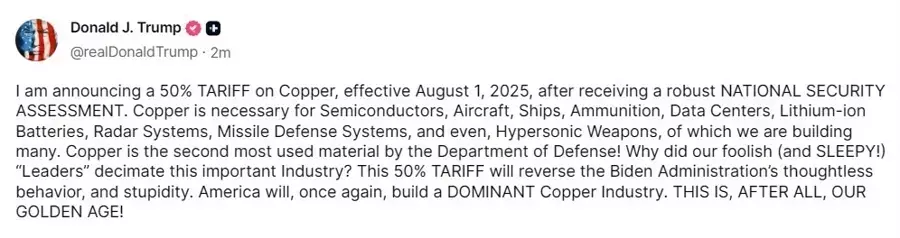
The announcement of a 50% import tariff on copper, scheduled for implementation in August 2025, signals a clear directive from former President Trump to prioritize domestic industrial self-reliance. This policy emerges from an exhaustive national security assessment, which presumably highlighted vulnerabilities in the current copper supply chain. The rationale is to create an economic environment that incentivizes and accelerates the development of a comprehensive copper sector within the nation's borders, encompassing everything from extraction to refinement.
Despite the strategic imperative, transforming this vision into reality presents substantial practical difficulties. The process of opening new copper mines and establishing state-of-the-art refining facilities is inherently time-consuming and capital-intensive. Such endeavors require extensive environmental impact assessments, securing permits, and significant investment in infrastructure and labor. Therefore, the ambition to swiftly pivot to a fully self-sufficient copper industry within a relatively short timeframe is likely to encounter considerable operational and logistical challenges.
This impending tariff, therefore, represents a pivotal moment in trade policy, aiming to reshape the landscape of the global copper market and redefine the United States' position within it. While the long-term benefits of a revitalized domestic copper industry are clear, the immediate implications for international trade relations and commodity markets will be profound. The move is anticipated to trigger a reevaluation of supply strategies by global manufacturers and potentially lead to shifts in pricing and availability of copper on a worldwide scale. The coming years will undoubtedly reveal the full extent of this policy's impact on both the American economy and the broader international trade system.