US Mortgage Applications Rise, Refinancing Surges as Rates Tick Up
The latest data from the Mortgage Bankers Association reveals a slight increase in mortgage application activity for the week concluding June 20, 2025. This uptick signals a potential shift in market sentiment, influenced by evolving mortgage rates. While generally not a significant market mover, these weekly figures offer valuable insights into the pulse of the US housing finance sector, illustrating how shifts in borrowing costs directly impact consumer demand for both home purchases and refinancing.
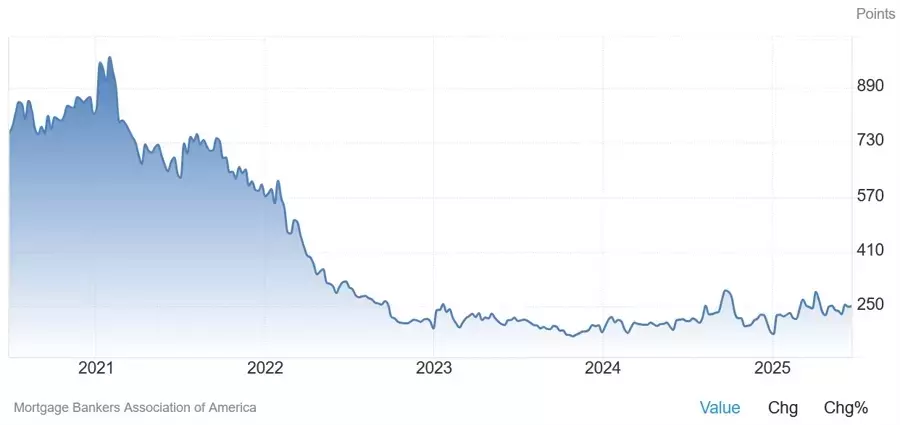
This week's report indicates a notable surge in refinancing activity, suggesting that homeowners are actively responding to interest rate fluctuations. Meanwhile, the purchase segment experienced a minor dip, highlighting the sensitivity of homebuyer demand to prevailing financial conditions. The overall picture painted by these numbers points to a market that, while reactive to interest rate movements, continues to demonstrate underlying resilience in certain areas of mortgage demand.
Mortgage Activity Sees Modest Upturn Amid Rate Fluctuations
The Mortgage Bankers Association's most recent statistics for the period ending June 20, 2025, show an overall rise in mortgage applications by 1.1%, contrasting with the 2.6% contraction observed in the preceding week. This modest recovery was primarily driven by an increase in refinancing applications, as the refinance index climbed to 713.4 from 692.4. Conversely, the purchase index slightly declined, moving from 248.1 to 165.2. The broader market index also improved, reaching 250.8 from 248.1, while the average 30-year mortgage rate saw a minor increase from 6.84% to 6.88%. This interconnected data underscores how shifts in interest rates directly influence consumer decisions in the mortgage sector, particularly in the refinancing segment, which appears more responsive to rate adjustments.
Further analysis of the data indicates that despite the overall positive movement in total applications, the housing market remains acutely sensitive to the subtle shifts in mortgage interest rates. The observed rise in refinancing activity points to borrowers taking advantage of available rates, possibly anticipating future increases or locking in current terms. The concurrent marginal rise in the average 30-year mortgage rate, though small, still plays a critical role in shaping the affordability landscape for potential homebuyers, thereby influencing the purchase index. These weekly reports, while not typically catalysts for significant market swings, provide essential granular detail that helps economists and market participants understand the evolving dynamics between lending costs and consumer behavior in the residential property sector, offering a snapshot of current housing finance trends.
Refinancing Momentum and Interest Rate Impact
The recent surge in the refinance index to 713.4, up from 692.4, reveals a significant wave of refinancing activity among homeowners. This upward trend suggests that despite a slight increase in the 30-year mortgage rate to 6.88%, many existing homeowners are still finding conditions favorable enough to restructure their current loans. This could be motivated by a desire to reduce monthly payments, shorten loan terms, or access home equity. The market index's rise to 250.8 from 248.1 further confirms this broader positive sentiment in mortgage applications. These figures collectively highlight the continuing allure of refinancing, even as lending rates experience minor upward adjustments, underscoring the ongoing efforts by consumers to optimize their financial positions within the prevailing interest rate environment.
The relationship between mortgage applications and interest rates is often inversely proportional, meaning that a rise in rates typically leads to a decrease in applications. However, the current data shows a nuanced picture where refinancing remains robust even with a slight rate hike. This resilience in refinancing could be attributed to various factors, including homeowners responding to prior rate fluctuations, strategic financial planning, or a general belief that current rates are still relatively competitive compared to historical averages or anticipated future increases. In contrast, the purchase index's slight decline to 165.2 from 248.1 indicates that higher interest rates are having a more immediate and direct impact on the affordability and demand for new home purchases. This divergence suggests that while refinancing opportunities are still being seized, the cost of new mortgages is beginning to temper the enthusiasm of prospective buyers, creating a dual dynamic within the mortgage market that warrants close observation for its broader implications on housing market stability and growth.