Canada's Ivey PMI Surges in June, Signaling Economic Rebound
The Canadian economy is demonstrating signs of resilience, as indicated by a significant upturn in the Ivey Purchasing Managers' Index (PMI) for June. This key economic indicator, which measures the sentiment of purchasing managers across various sectors, has climbed back into expansionary territory, signaling a potential resurgence in business activity. Despite its historical volatility, the latest figures provide an encouraging outlook, suggesting that the Canadian economic landscape is navigating towards a more robust recovery. This positive trajectory is further supported by an analysis of the index's underlying components, which reveal shifts in critical areas such as employment, inventory levels, and supply chain dynamics.
Furthermore, the data highlights evolving inflationary pressures within the Canadian economy. The notable rise in the price index component of the Ivey PMI underscores the ongoing challenges businesses face with increasing costs. This inflationary trend, alongside movements in other sub-indices, offers a nuanced picture of the economic climate. While the overall increase in the Ivey PMI is a welcome development, the detailed breakdown of its constituents provides essential insights for policymakers and market observers to assess the pace and nature of Canada's economic recalibration.
Ivey PMI: A Barometer of Canadian Economic Health
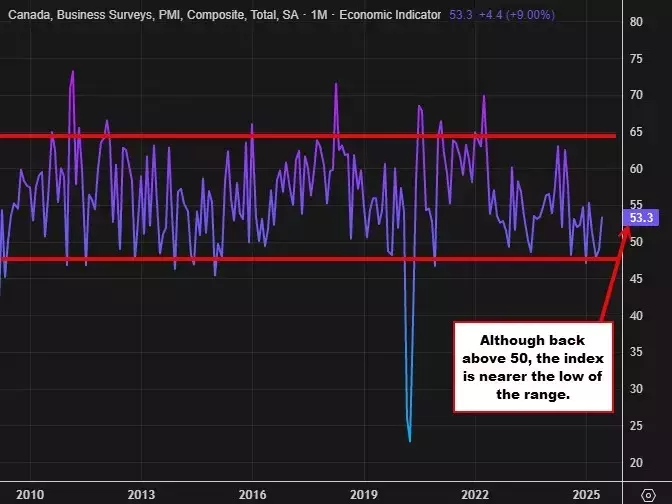
The Ivey Purchasing Managers' Index (PMI) in Canada experienced a substantial uplift in June, reaching 53.3, a marked increase from the previous month's 48.9. This rebound is particularly noteworthy as it moves the index above the critical 50-point mark, which delineates expansion from contraction in economic activity. Such a shift is generally interpreted as a positive signal, suggesting an improvement in overall business conditions and an optimistic outlook among Canadian purchasing managers. The index, while known for its month-to-month fluctuations, serves as an important early indicator of economic trends, providing a snapshot of the health and direction of the Canadian economy.
The Ivey PMI's ascent above 50 points signifies an invigorated economic pulse within Canada. This recovery from a prior contractionary reading points towards a renewed confidence in the business sector. The implications of this upward trajectory are manifold, touching upon aspects such as investment, production, and employment intentions. Although the index's inherent volatility necessitates a cautious interpretation, the latest data contributes to a growing body of evidence suggesting that the Canadian economy is on a path of stabilization and growth, absorbing previous economic headwinds and charting a course towards a more sustained recovery phase.
Diving Deeper: Component Analysis and Inflationary Signals
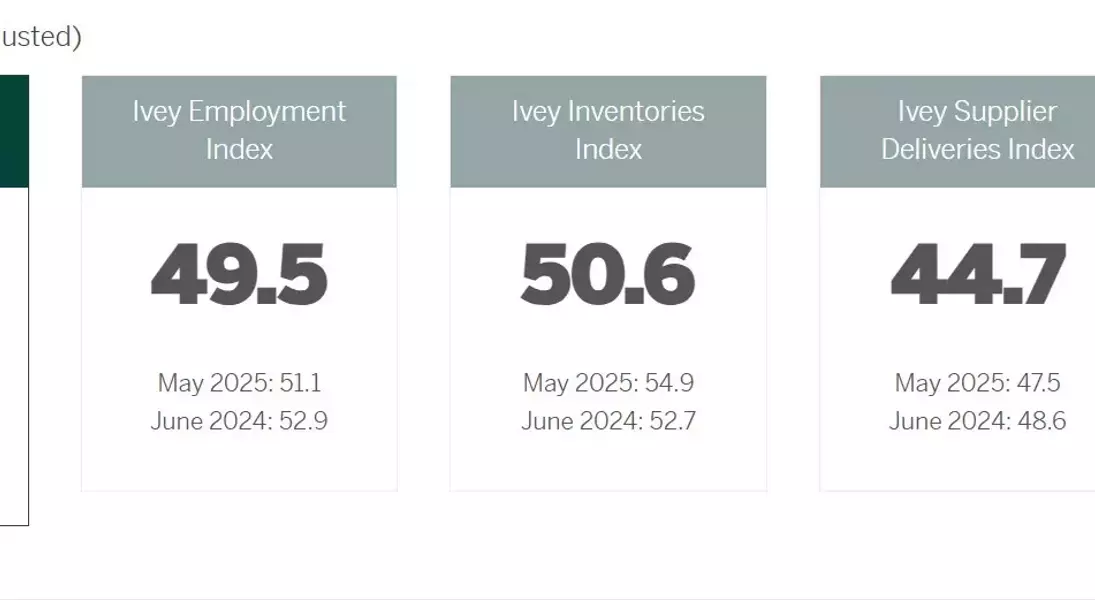
A closer examination of the Ivey PMI's constituent elements reveals a complex interplay of factors shaping the Canadian economic landscape. While the overall index improved, certain components showed mixed signals. Employment, for instance, slightly decreased to 49.5 from 51.1, indicating a marginal slowdown in hiring. Inventory levels also saw a reduction, moving from 54.9 to 50.6, which could suggest businesses are managing stock more efficiently or responding to changes in demand. Supplier deliveries slowed down to 44.7 from 47.5, potentially pointing to improved supply chain fluidity or decreased pressure on suppliers.
Crucially, the price index component of the Ivey PMI jumped to 70.2 in June from 66.9 in May. This acceleration in the price index is a significant takeaway, underscoring persistent inflationary pressures within the Canadian economy. Businesses are likely facing elevated input costs, which could eventually translate into higher consumer prices. The rise in the Ivey PMI, coupled with the escalating price index, provides central bankers and policymakers with vital information for their assessments of economic health and future monetary policy decisions. These granular insights are crucial for understanding the nuances behind the headline figure and for forecasting future economic performance and price stability in Canada.