USD Prospects in H2 2025: A Time Zone Perspective
Navigating the Dollar's Path: A Global Time Zone Chronicle
The Greenback's Resilience: US Trading Hours and Federal Reserve Influence
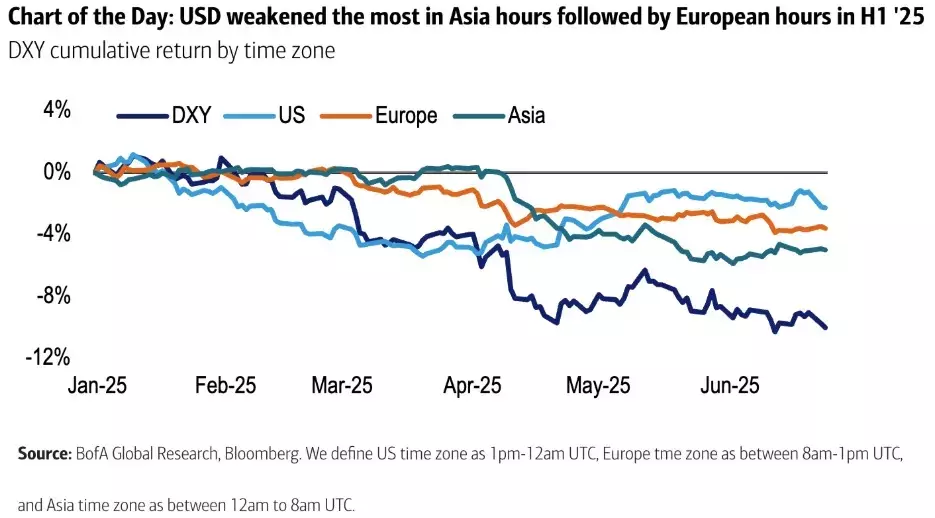
Analysis reveals a significant correlation between the cumulative performance of the US Dollar during American trading sessions and the Federal Reserve's interest rate projections. With expectations of steady rates for the remainder of the year, the dollar is anticipated to find a degree of stability and support during these crucial US market hours, counteracting some of its earlier depreciation.
Asian Market Dynamics: A Potential Shift in Dollar Selling Trends
Historically, Asian investors have been major contributors to the dollar's weakening trend throughout the initial half of 2025. However, after substantial unwinding of long dollar positions, the intensity of dollar selling during Asian trading hours has noticeably subsided. Future significant depreciation from this region is likely to depend on new, compelling bearish catalysts emerging globally.
European Sentiment: The Equity Performance Litmus Test for Dollar Weakness
The extent of the dollar's decline during European trading hours is intrinsically linked to the relative performance of international equities against their US counterparts. While non-US equities showed strength in the first quarter, American stocks regained dominance in the second. Without a reversal of this trend, European foreign exchange traders may lack the conviction to aggressively push for further dollar depreciation.
Reduced Incentive for Currency Hedging
Given the dollar's substantial depreciation experienced earlier in the year, foreign investors holding US assets now face reduced incentives to increase their foreign exchange hedges. This shift in hedging behavior could subtly influence the dollar's supply and demand dynamics in the global market.
Concluding Thoughts: A Moderated Outlook for the Dollar's Decline
Bank of America's time zone-based framework suggests a deceleration in the dollar's downward trajectory in the second half of 2025. The stability of Federal Reserve policy is expected to remove a primary driver for continued losses, particularly during US trading periods. While Asian market activity may remain subdued without fresh global catalysts, the interplay between international and US equity market performance remains a key determinant for the dollar's path, especially within European trading hours. Consequently, a less aggressive pace of dollar selling is projected, though a nuanced bearish bias could persist if global risk assets continue to outshine their American counterparts.