Australian Q2 CPI Data: A Pivotal Moment for RBA's Monetary Policy Trajectory
The economic landscape in Australia faces a crucial juncture this week with the impending release of the second-quarter Consumer Price Index (CPI) figures. This data point is not merely a statistical update; it represents a significant barometer for the Reserve Bank of Australia's (RBA) future monetary policy directions. Market participants, economists, and policymakers alike are keenly awaiting the results, especially the 'trimmed mean' inflation, as it offers vital insights into the core inflationary trends within the Australian economy. The implications of this report could either solidify the RBA's current approach or trigger a shift towards an altered interest rate strategy, potentially impacting various sectors from housing to financial markets.
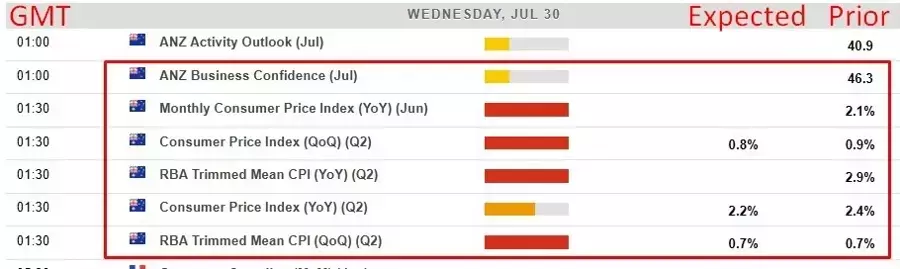
Scheduled for Wednesday, July 30th, at 11:30 AM Sydney time (equivalent to 02:30 GMT or Tuesday, July 29th, 21:30 US Eastern time), the Q2 CPI report encompasses the period from April to June. The market's consensus points towards specific expectations, with the trimmed mean, a key measure of underlying inflation, drawing considerable attention. Analysts are closely examining whether this core inflation indicator will remain stable quarter-on-quarter or show a slight deceleration year-on-year. A failure of the trimmed mean annual rate to decline could signal that the RBA might opt to maintain its current interest rates at its upcoming meeting, scheduled for August 11th and 12th. Conversely, a more pronounced dip, potentially towards the RBA's forecast of 2.6% annually (implying approximately 0.55% quarterly), could pave the way for an adjustment in rates.
The Commonwealth Bank of Australia (CBA) has articulated its projections, highlighting the quarterly inflation print as paramount. CBA anticipates a headline CPI increase of 0.8% for the second quarter of 2025, which would bring the annual rate down to 2.2%. More critically for policy considerations, the trimmed mean CPI is forecast to rise by 0.7% over the quarter. While this would result in only a marginal decrease in the annual trimmed mean rate to 2.8%, a slight rounding could potentially see it reach 2.7%. These nuanced figures underscore the delicate balance the RBA must strike when assessing the economic trajectory.
Looking ahead, CBA's outlook suggests the possibility of an interest rate reduction at the RBA's August meeting. This expectation is largely predicated on the sustained moderation of annual trimmed mean inflation. Despite market pricing indicating a strong probability of an August rate cut, the outcome remains uncertain. Furthermore, CBA envisages additional rate cuts, with another potential adjustment in November, and even flags the risk of further reductions in early 2026. This forward-looking perspective indicates a belief that Australia's inflationary pressures may continue to ease, providing the central bank with scope for further easing measures.
Ultimately, the upcoming Q2 CPI data is more than just a set of numbers; it's a critical determinant for Australia's immediate economic future. The figures, particularly the underlying inflation metrics, will provide the RBA with the necessary evidence to shape its next policy decision, impacting not only the cost of borrowing but also the broader economic sentiment and trajectory for the coming months. All eyes will be on Sydney come Wednesday, as the inflation report unveils the next chapter for Australian monetary policy.