Canadian Dollar Plunges Amidst Imposed U.S. Tariffs
The Canadian dollar has witnessed a sharp depreciation following the United States' decision to implement a significant increase in tariffs on Canadian imports. This move represents a dramatic escalation in trade tensions between the two North American allies, with the potential to reshape their economic relationship and impact various sectors. The new tariff regime signals a more protectionist stance from the U.S., placing immediate pressure on Canada's economy and its currency.
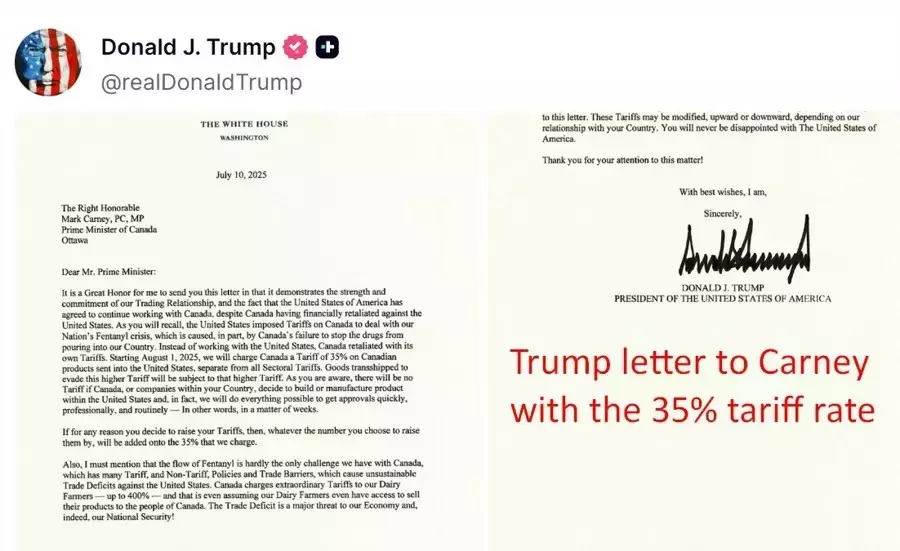
United States Imposes Drastic Tariff Hike on Canadian Goods
On a significant Friday, July 11, 2025, former President Donald Trump delivered a pivotal blow to Canadian trade relations by announcing a substantial tariff increase. Effective August 1st, a new 35% tariff rate will be levied on goods imported from Canada, marking a dramatic escalation from the previous two-tiered system of 10% and 25%. This policy shift was communicated through a formal letter to Governor Carney, though specifics regarding the continuation of exemptions for trade compliant with the United States-Mexico-Canada Agreement (USMCA) were notably absent. Furthermore, this broad tariff application stands apart from any existing sector-specific duties.
The newly imposed tariff is not merely a static measure; its future adjustment, whether upwards or downwards, remains contingent upon the evolving relationship between the United States and Canada. A key factor influencing this flexibility is Canada's willingness to collaborate with the U.S. on efforts to curb fentanyl trafficking. This direct linkage between trade policy and drug interdiction highlights a multifaceted approach by the U.S. administration. The short timeframe between the announcement and the August 1st implementation date leaves little room for negotiation or adaptation, creating immediate and profound challenges for Canadian exporters and the broader Canadian economy. This aggressive trade action underscores a period of intensified economic nationalism and strategic leverage in international relations.
From an observer's perspective, this recent imposition of tariffs underscores the precarious nature of international trade relations, even between historically close allies. The swift and substantial increase in tariffs by the United States on Canada highlights how non-economic issues, such as drug trafficking, can be leveraged to exert economic pressure. This development serves as a stark reminder of the complexities inherent in global commerce, where political agendas can abruptly alter trade landscapes. It compels us to consider the broader implications for supply chains, consumer prices, and bilateral trust, urging all nations to seek stable and predictable frameworks for cooperation rather than resorting to unilateral measures.