Ethereum's Market Crossroads: Short Squeeze or Continued Decline?
The trajectory of Ethereum in the coming days presents a fascinating dilemma for market participants. The latest Commitment of Traders (COT) report reveals a significant bearish bias among speculative investors, yet this very sentiment could paradoxically pave the way for an explosive upward movement. This analysis delves into the intricate dynamics of trader positioning, offering insights into how prevailing market stances might influence Ethereum's valuation, highlighting the critical role of the COT report in discerning these complex market signals.
The Commitment of Traders (COT) report, a weekly publication from the Commodity Futures Trading Commission (CFTC), offers a vital window into the collective positioning of various market participants in futures markets. This report categorizes traders, such as 'Leveraged Funds' (speculators), 'Dealer Intermediaries' (market makers), 'Asset Managers/Institutions' (long-term investors), and 'Other Reportables' (large traders not fitting into other specific categories), revealing their net long or short positions. The significance of this data lies in its ability to highlight areas of extreme positioning, which can often precede significant price movements. For instance, if a particular asset sees an overwhelming number of short positions from speculative funds, it suggests a strong bearish outlook among those seeking rapid profits. However, such extreme sentiment can also set the stage for a 'short squeeze'—a phenomenon where an unexpected price increase forces short sellers to cover their positions, thereby accelerating the upward trend.
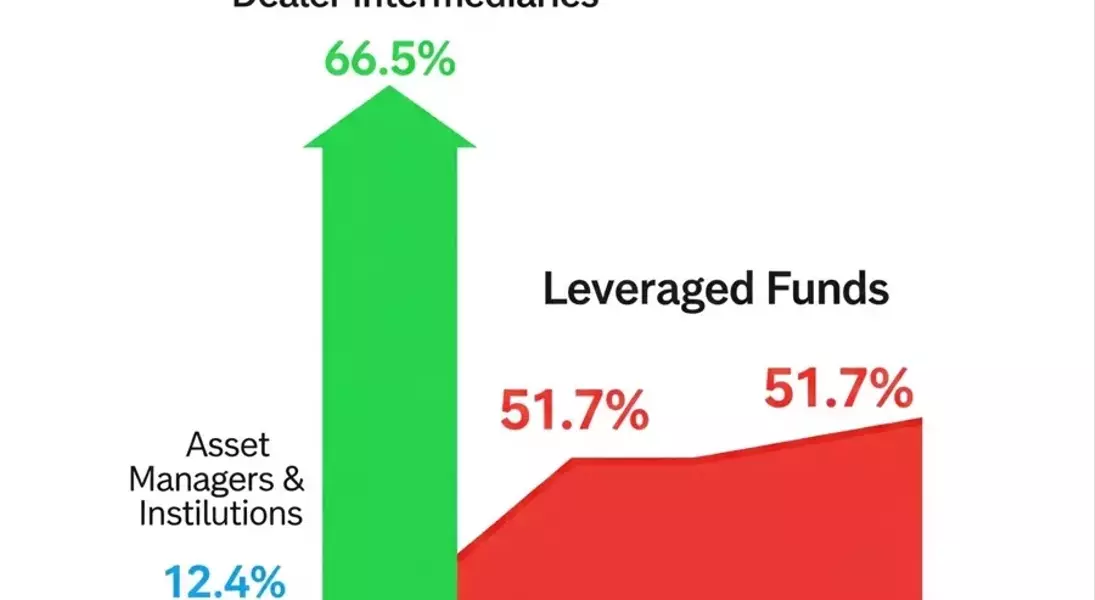
A recent examination of the COT report, specifically for Ethereum futures as of July 1, 2025, underscores a notable divergence in market expectations. Leveraged funds have taken a considerably bearish stance, holding 12,574 short contracts against a mere 1,275 long contracts, accounting for 51.7% of the total open interest. This decisively indicates their anticipation of a price decline for Ethereum. In stark contrast, Dealer Intermediaries are predominantly long, holding 66.5% of their positions on the bullish side, likely due to their role in hedging and providing market liquidity. Similarly, Asset Managers and Institutions also demonstrate a bullish inclination, with 12.4% of total open interest in long positions versus a small 2.2% in short positions. This creates a fascinating tension within the market, where short-term speculative pressure clashes with longer-term, more fundamentally driven positions.
Considering these diverse positions, Ethereum's near-term outlook appears characterized by increased downward pressure and potential volatility. The substantial short interest from leveraged funds suggests that they will actively work to push prices lower to profit from their bets. This could lead to swift price drops or a sustained downtrend, potentially testing key support levels. However, this immediate bearish pressure is counterbalanced by the more optimistic stance of institutional investors and asset managers, who might view any significant dips as opportunities to acquire Ethereum at reduced prices. Their potential accumulation could establish a price floor or lead to a period of market consolidation around these support levels. The crucial factor to monitor will be the actions of leveraged funds: whether they continue to expand their short positions, indicating further decline, or if they begin to unwind these positions, which would signal a potential reversal and could trigger a substantial short squeeze. For active traders, closely observing both price action and shifts in leveraged fund positioning is paramount for making informed decisions in this highly dynamic market environment.
The current market composition for Ethereum, as elucidated by the COT report, highlights a precarious balance. While the overwhelming bearish sentiment among speculative entities portends potential declines, the counterbalancing long positions from institutional players introduce an element of resilience. Traders navigating this landscape must remain agile, prepared for either a continuation of the downward trend or a sudden, sharp reversal driven by a short squeeze. Understanding these underlying positional biases is indispensable for grasping the larger market context and making strategic trading choices.