EURUSD: A Test of Strength for Sellers as Key Levels Hold
Navigating the Storm: EURUSD's Battle at Pivotal Levels
The Initial Ascent and Subsequent Retreat of EURUSD's Momentum
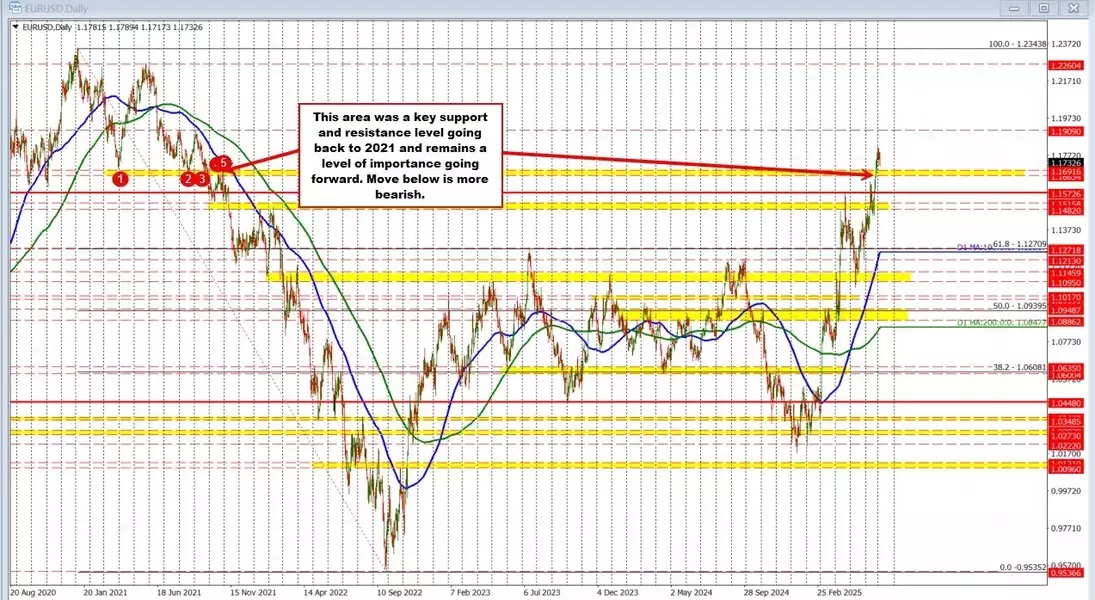
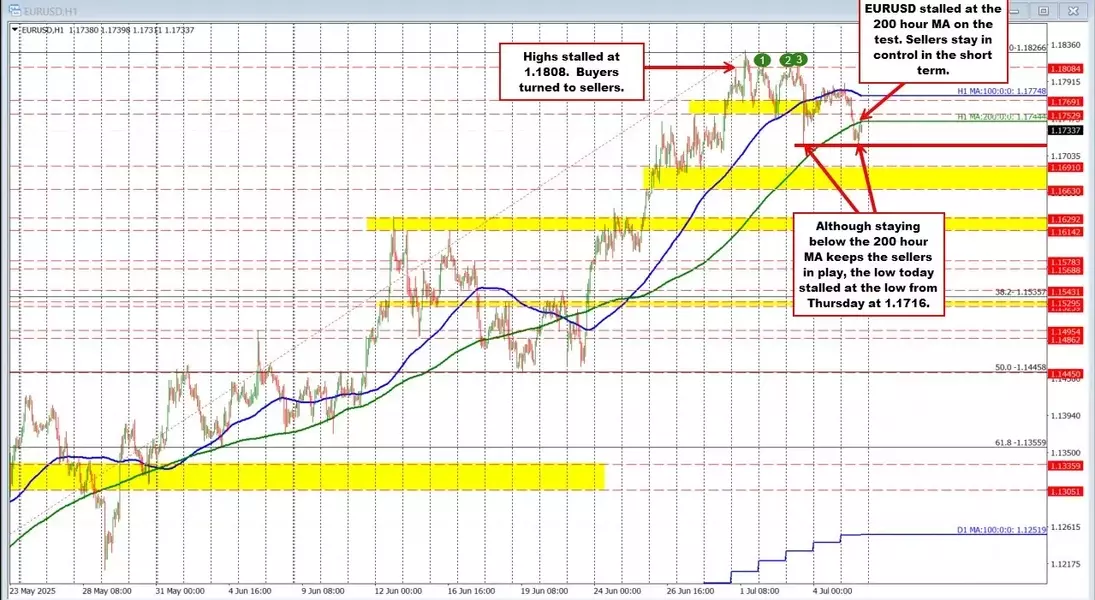
The EURUSD pair recently ascended to its highest point since September 2021, reaching a peak of 1.18266. However, this upward trajectory was short-lived, as the currency pair failed to sustain momentum beyond this threshold. A shift in market dynamics saw buyers retreat, leading to a notable decline. This correction pulled the pair below its 100-hour moving average, with prices eventually bottoming out near 1.1718.
The Resilience of Resistance: Sellers Maintain Control
Following the initial pullback, the EURUSD experienced a modest recovery, attempting to challenge the 100-hour moving average. This level, however, proved to be a formidable barrier, with sellers consistently stepping in to cap any upward movement. The pair subsequently dipped below the 200-hour moving average, currently situated at 1.1744, indicating a persistent selling pressure in the market. Despite these bearish signals, the critical low of 1.1718 from last Thursday has yet to be decisively broken, underscoring its significance as a short-term support.
Critical Juncture: The Path Forward for EURUSD
The currency pair has once again approached the 200-hour moving average, where renewed selling interest has prevented any significant advance. As long as the price remains beneath this key technical indicator, the prevailing bearish sentiment is expected to continue. A conclusive break below the 1.1718 support level would likely pave the way for a deeper decline, targeting the 1.1663–1.1691 range. This zone, identifiable on the daily chart, has historically served as a significant area of both support and resistance since 2021. A breach of this wider range could signal intensified bearish momentum, bolstering the confidence of sellers in the market.