Gold Prices Retreat Following Strong US Jobs Report
Gold's recent advance experienced a sharp reversal after the release of a stronger-than-anticipated US Non-Farm Payrolls report. This unexpected positive economic data prompted a recalibration of interest rate expectations, pushing them towards a more hawkish stance, which in turn put downward pressure on gold prices. Despite this immediate pullback, the broader outlook for gold remains fundamentally positive, as the underlying trend suggests a continued decline in real yields, which typically supports the precious metal's value. Market participants are now closely monitoring key technical levels for potential entry points, with both buyers and sellers positioning themselves based on the evolving interest rate landscape and upcoming economic indicators.
The market's reaction to the NFP figures underscores the sensitivity of gold to monetary policy expectations. While a more aggressive tightening cycle could temper gold's appeal in the short term, the prevailing macro environment, characterized by easing monetary conditions, is expected to continue providing a tailwind for the metal. Traders are observing critical trendlines and support levels, anticipating renewed buying interest as long as the long-term fundamentals remain intact. The technical charts across various timeframes reveal a current downward correction within a larger upward channel, highlighting the interplay between short-term news events and long-term market dynamics.
Market Reactions and Technical Outlook
The recent US Non-Farm Payrolls report significantly impacted gold prices, causing a notable retreat. Prior to this, gold had enjoyed a steady ascent, fueled by market anticipation of more accommodative Federal Reserve policies. However, the robust jobs data led to a reassessment of interest rate probabilities, suggesting a less dovish path for the Fed than previously expected. This shift in sentiment directly translated into a downward adjustment for gold, as higher interest rates typically diminish the appeal of non-yielding assets like gold. Despite this immediate negative reaction, the overarching market sentiment for gold retains a bullish bias, predicated on the ongoing decline in real yields, a key factor supporting its long-term appreciation.
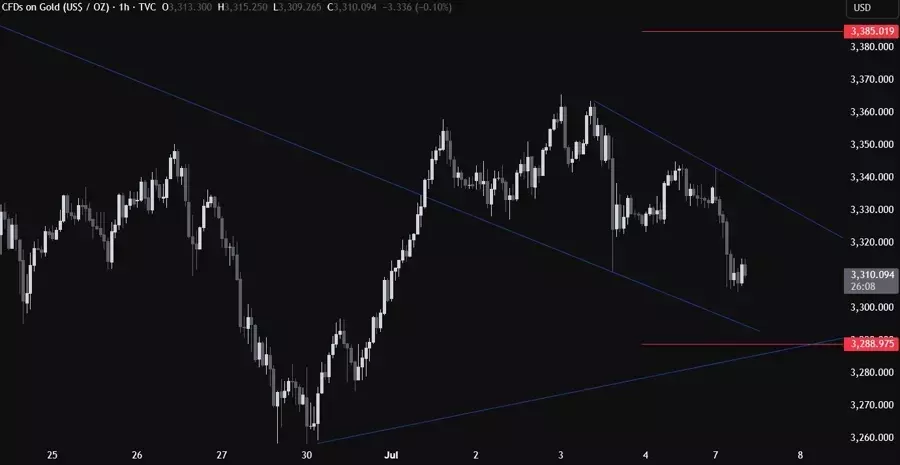
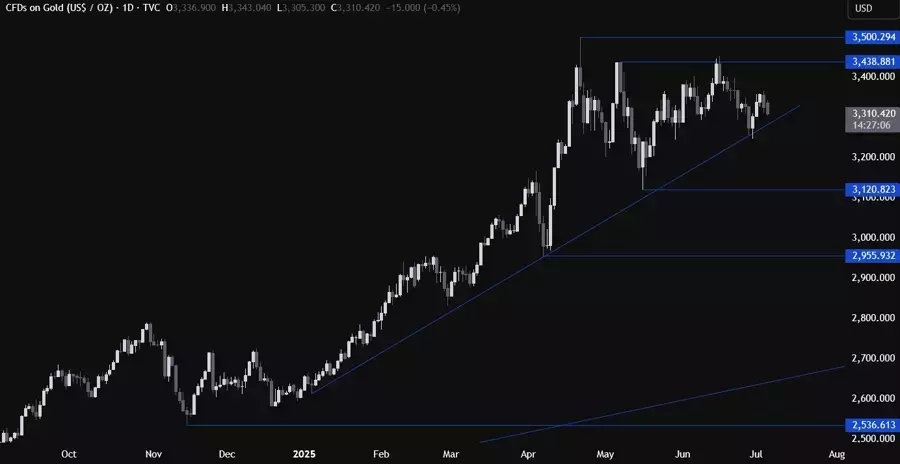
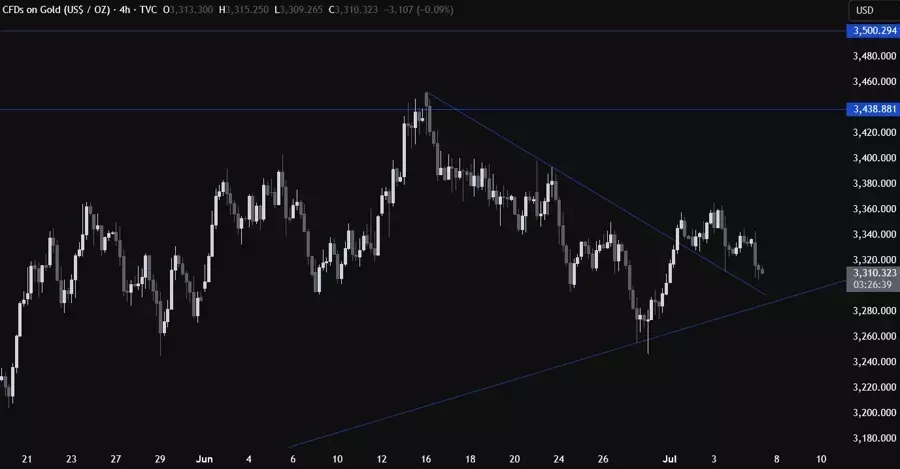
Analyzing gold's price action across daily, four-hour, and one-hour charts reveals distinct patterns in response to the NFP shock. On the daily timeframe, gold is observed pulling back towards a significant upward trendline. This level is crucial, as it represents a potential support zone where buyers might re-enter the market, aiming for new all-time highs. Conversely, a decisive break below this trendline could signal further declines, with 3120 emerging as the next significant support level. The four-hour chart further illustrates the NFP report as a turning point, with traders now awaiting new catalysts or more favorable price levels before making their next moves. The one-hour chart highlights a minor downward trendline defining the current pullback. Sellers are capitalizing on this trendline to push prices lower, while buyers are looking for a break above it to initiate a rally towards the 3438 level. The average daily range also provides additional insight into the metal's intraday volatility, guiding short-term trading decisions.
Future Drivers and Strategic Positioning
Looking ahead, the gold market will be influenced by several key factors, including upcoming economic data and political developments. While the immediate focus is on digesting the implications of the strong NFP report, the broader narrative of potential Federal Reserve easing remains a significant underlying current. Any signs of sustained economic strength could temper expectations for aggressive rate cuts, potentially creating headwinds for gold. Conversely, any indications of economic slowdown or increased geopolitical uncertainty could reignite safe-haven demand, propelling gold higher. Traders are therefore adjusting their strategies, seeking to identify critical junctures for entry or exit, based on both technical signals and fundamental shifts in the global economic landscape.
Beyond the immediate aftermath of the NFP report, market participants are keenly awaiting future economic data releases and political pronouncements that could further shape gold's trajectory. Specifically, upcoming statements regarding tariffs and trade agreements, as well as the US Jobless Claims figures, are anticipated to provide additional clarity on the health of the US economy and the future path of monetary policy. These events are pivotal in determining the Federal Reserve's next steps, which in turn will significantly impact real yields and, consequently, gold prices. The interplay between these economic indicators and central bank actions will be crucial for gold's performance. The market's anticipation of renewed dovishness from the Fed, counterbalanced by strong economic data, creates a complex environment where gold's long-term upward trend, rooted in the expectation of falling real yields, will be tested by short-term corrections driven by evolving rate expectations. Investors and traders must remain agile, employing robust technical analysis in conjunction with a deep understanding of macroeconomic fundamentals to navigate these dynamic market conditions.