UBS Revises USD/JPY Forecast Upward Amidst Dollar Strength and BOJ's Accommodative Stance
UBS has recently adjusted its outlook for the USD/JPY currency pair, raising its third-quarter projection significantly. This revision comes as a direct consequence of the sustained strength exhibited by the US dollar in global markets and the ongoing, prudent monetary policy adopted by the Bank of Japan. The financial institution emphasizes that the currency pair might soon challenge critical resistance levels, especially if economic indicators, such as US Treasury yields, continue their firm ascent. Additionally, the potential for new trade agreements between the United States and Japan is being closely monitored, as such developments could further influence the Bank of Japan's dovish stance, potentially necessitating additional measures to support the Japanese economy.
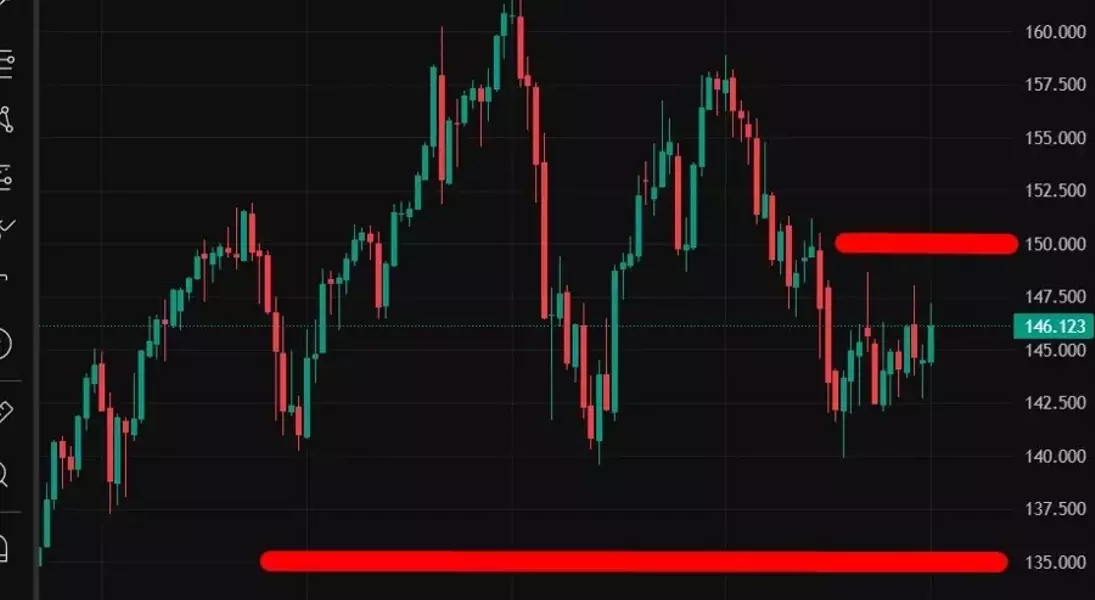
Revised Projections for USD/JPY Exchange Rate
UBS has recalibrated its forecast for the USD/JPY exchange rate, pushing its Q3 target from 135 to 140. This upward revision is primarily driven by two critical factors: the enduring strength of the U.S. dollar and the Bank of Japan's persistently cautious monetary policy. The dollar's resilience, fueled by factors such as robust economic data and higher interest rate expectations in the U.S., continues to exert upward pressure on the currency pair. Concurrently, the Bank of Japan's commitment to maintaining an accommodative stance, aimed at fostering sustainable inflation, creates a divergent monetary policy path compared to other major central banks, thereby widening the interest rate differential in favor of the dollar.
The bank's analysis suggests that the USD/JPY pair could potentially test the 200-day moving average, positioned close to the 150 mark, in the near term. This scenario is particularly plausible if U.S. Treasury yields manage to sustain their current high levels, making dollar-denominated assets more attractive to investors. Such a move would reflect not only the immediate market dynamics but also the broader macroeconomic environment shaping investor sentiment. The interplay between U.S. economic performance, particularly interest rate movements, and Japan's efforts to stimulate its economy through unconventional monetary easing, will be pivotal in determining the trajectory of this key currency pair.
Implications of Trade Agreements and BOJ Policy
Beyond monetary policy, UBS also highlighted the significant impact that a potential trade deal between the U.S. and Japan could have on the Bank of Japan's (BOJ) policy direction. Any new trade agreement, while potentially beneficial in some respects, could introduce fresh challenges for Japan's export-oriented economy. Should such a deal lead to unfavorable terms or increased competition for Japanese exporters, it could dampen economic growth prospects and put downward pressure on inflation.
In response to these potential economic headwinds, the Bank of Japan might find itself compelled to adopt an even more accommodative monetary policy. This could involve further expanding its quantitative easing program, adjusting its yield curve control, or even considering negative interest rate adjustments. The aim would be to cushion the economy from external shocks and ensure that Japan remains on track to achieve its inflation targets. Therefore, the evolving landscape of international trade relations, especially between two major economic powers like the U.S. and Japan, adds another layer of complexity and influence to the BOJ's already intricate policy-making calculus, making a more dovish stance a likely outcome if trade tensions escalate or unfavorable agreements are reached.